Ribbed, Fluted and Faceted: Why Architectural Planter Shapes Are Trending
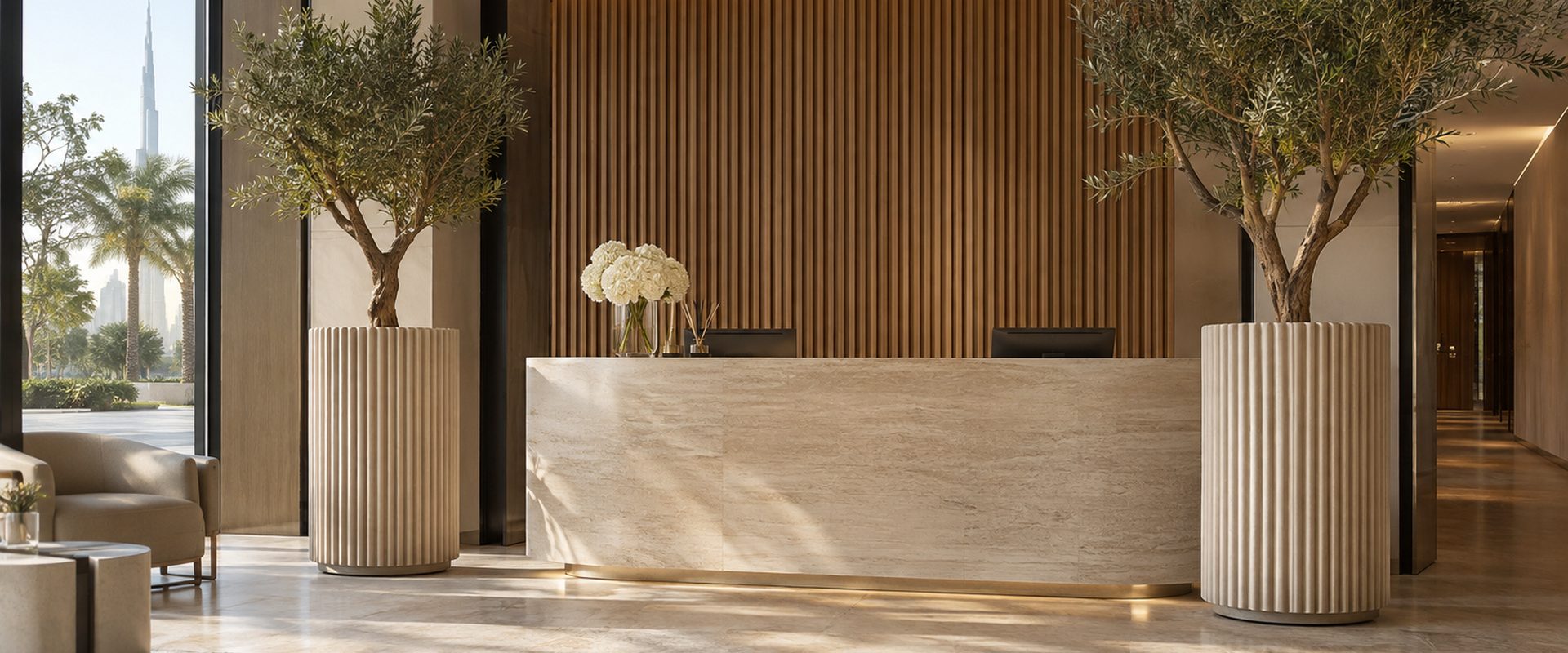
Planter design is moving away from plain cylinders and simple boxes. Across interiors and landscapes, designers are choosing containers with vertical ribs, soft flutes and crisp facets that give greenery a stronger architectural presence. Ribbed planters in particular have become a familiar sight in hotel lobbies, retail frontages and residential terraces, echoing the reeded panels and fluted joinery found elsewhere in contemporary interiors. Below, we look at what sets each shape apart, why designers are turning to them and how to specify them well for UAE projects.
Understanding the Three Shapes
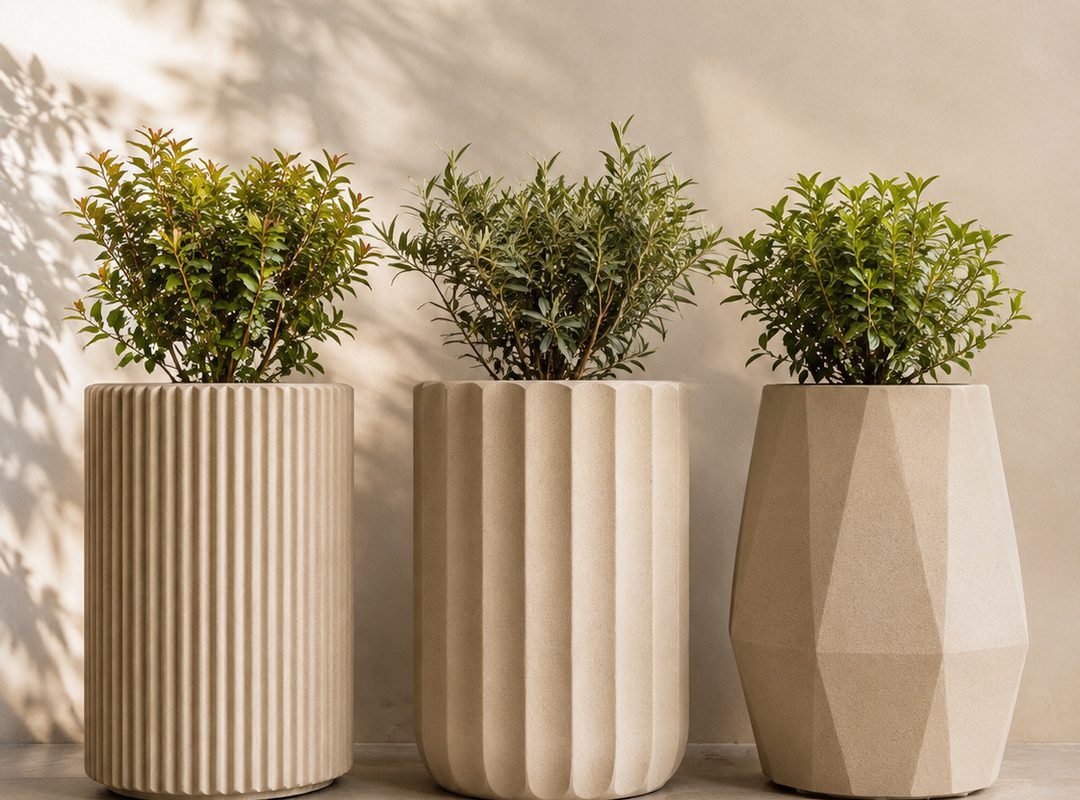
Ribbed
Ribbed planters feature raised vertical ridges running from base to rim. The profile can be tight and regular or broad and bold, and the repetition creates a strong sense of rhythm.
Fluted
Fluting reverses the idea, using concave channels set into the surface. The term comes from classical columns, and fluted forms tend to feel softer and more formal than their ribbed equivalents.
Faceted
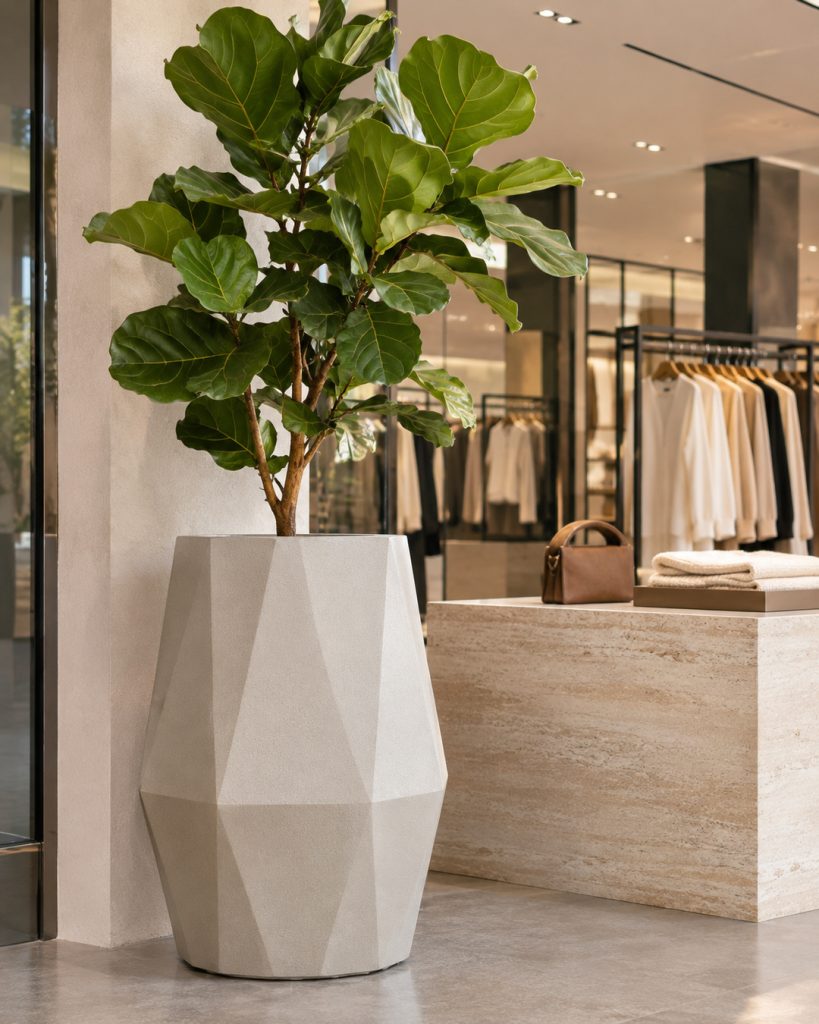
Faceted planters are made up of flat planes meeting at sharp edges, creating a geometric, almost crystalline form. They suit modern settings where clean lines and strong angles are already part of the design language.
Why These Shapes Are Catching On
Linear relief surfaces have been rising in interiors for several years. ArchDaily’s feature on ribbed and fluted panels describes how these surfaces catch light unevenly and add depth to flat walls. Planters have followed. Spring Fair’s garden trends for 2026 list ribbed, fluted and faceted pots under containers as design statements, and Homes and Gardens has described fluted planters as one of this year’s biggest outdoor trends.
Part of the appeal is that shape adds interest without relying on colour or ornament. A ribbed or fluted form looks considered even in a neutral finish, which suits the restrained palettes many UAE projects favour.
Manufacturing method also plays a part. Because GRP planters are formed in moulds, ribs and flutes can be reproduced consistently across a full batch, so repeated pieces match along a terrace or corridor. That consistency matters on larger projects where many identical planters are specified.
Light, Shadow and the UAE Sun
Relief surfaces depend on light, which works in their favour in the UAE. Strong directional sunlight outdoors throws crisp shadows into each groove, so the planter changes character through the day. Indoors, ribs and flutes look their best under grazing light from windows or wall washers, while flat frontal lighting can make them read almost plain. If a planter is intended as a focal point, discuss lighting angles with the design team early.
Where Ribbed Planters Work Best
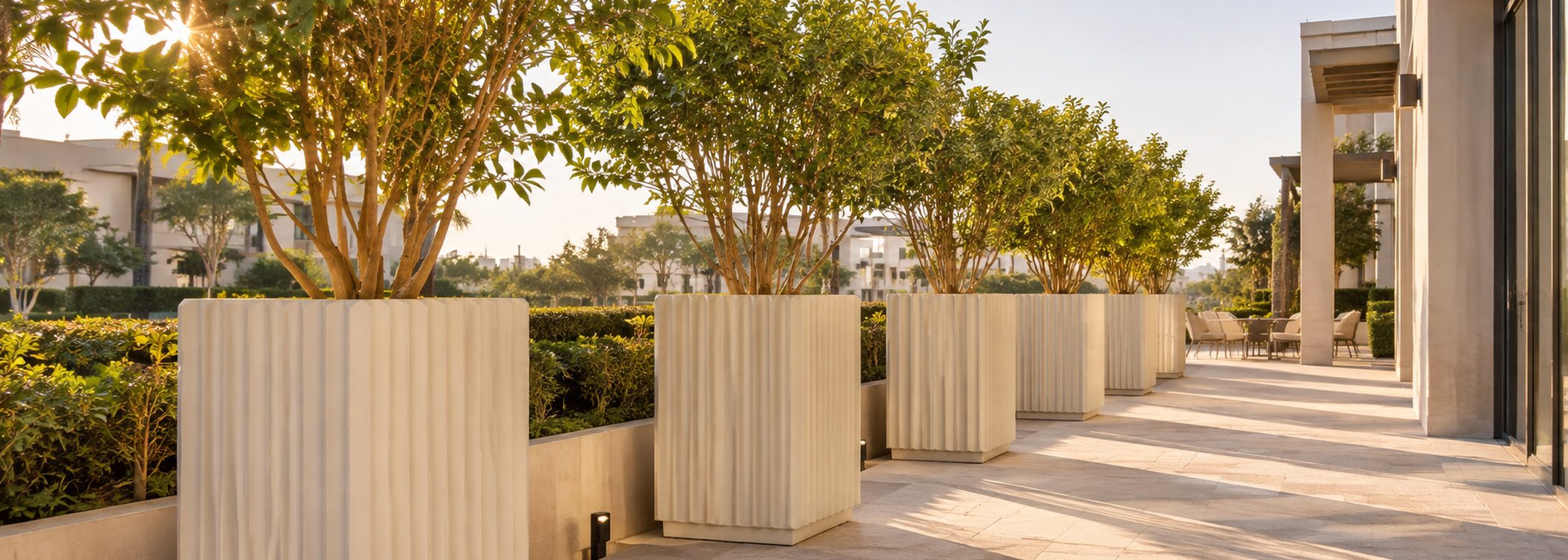
Ribbed planters suit lobbies, receptions and entrances, where their vertical rhythm can echo columns, cladding or joinery. Fluted forms sit comfortably in classic and hospitality interiors, while faceted designs work well in contemporary retail and office spaces. Outdoors, all three add definition to terraces and courtyards, particularly when planters are repeated in a line. Desert Pottery’s Ribbed collection brings this profile to GRP, and our interior landscaping team can help place these forms within a wider planting scheme.
Specifying Shape Well
Scale the detail to the planter
Rib width and depth should suit the overall size. Fine ribs can disappear on a very large planter viewed from a distance, while broad ribs can overwhelm a small one. Viewing distance is a useful starting point.
Keep the finish supportive
Shape and finish work together. Matte and textured finishes generally show relief detail more clearly than high gloss, which can create distracting reflections across ridges. Our article on matte and raw planter finishes and our guide to colour and finish for GRP planters cover these choices in more depth.
Pair shape with planting
Strong profiles work best with planting that leaves them visible. Upright, architectural plants such as clipped trees, palms or tall grasses let the surface show, while trailing species can cover the very detail that gives the planter its character.
Plan for cleaning
Grooves and channels can collect dust and sand, particularly outdoors. A soft brush and gentle rinse, as outlined in our seasonal care guide for GRP planters, keeps relief surfaces crisp.
Go bespoke when proportions matter
Where a standard profile does not suit the space, bespoke GRP planters can be made to specific dimensions, shapes and textures.
Shape as the Statement
Ribbed, fluted and faceted designs give planting a stronger frame, relying on shape and shadow rather than ornament to hold the eye. They are part of a wider move towards relief surfaces that is visible in joinery, cladding and furniture as well as planters. Getting the profile and scale right for each setting means the effect holds up close as well as from across the room. To discuss ribbed planters or a bespoke shape for your project, contact the Desert Pottery team.