Textured, Not Glossy: Why Matte and Raw Finishes Are Replacing High Gloss Planters in 2026
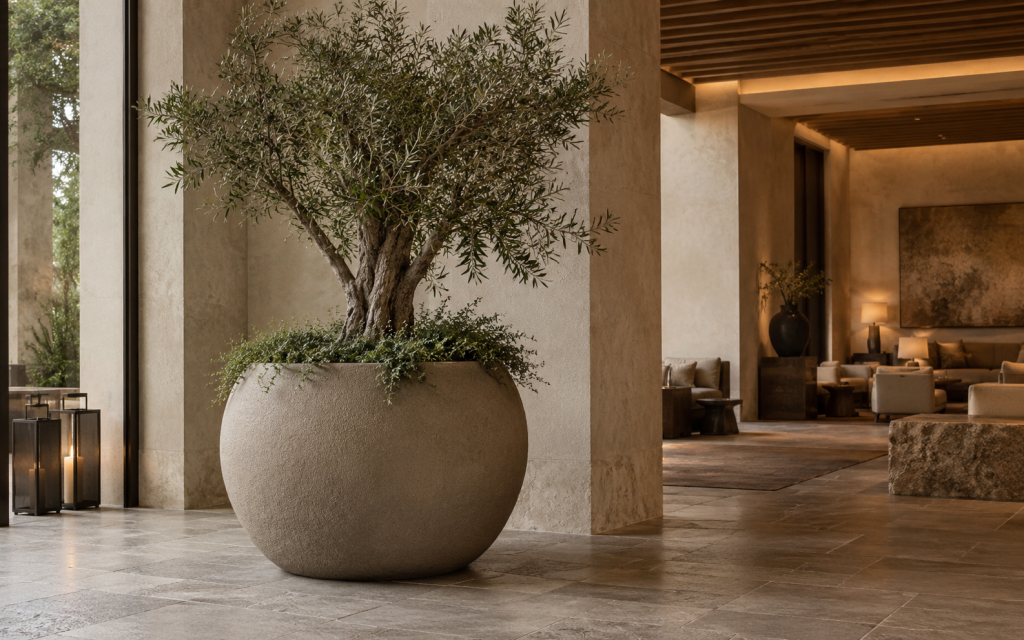
For most of the last decade, a high gloss finish was the default choice for a statement planter. It photographed well, it read as premium, and it matched the polished materials commonly specified in hospitality and retail interiors. Matte planter finishes are now overtaking that default across a growing number of UAE projects, and the shift says as much about how interiors are being designed as it does about the planters themselves. Where a glossy surface once signalled quality on its own, designers now increasingly judge a planter finish by how well it sits within the wider material story of a space.
Why Gloss Dominated for So Long
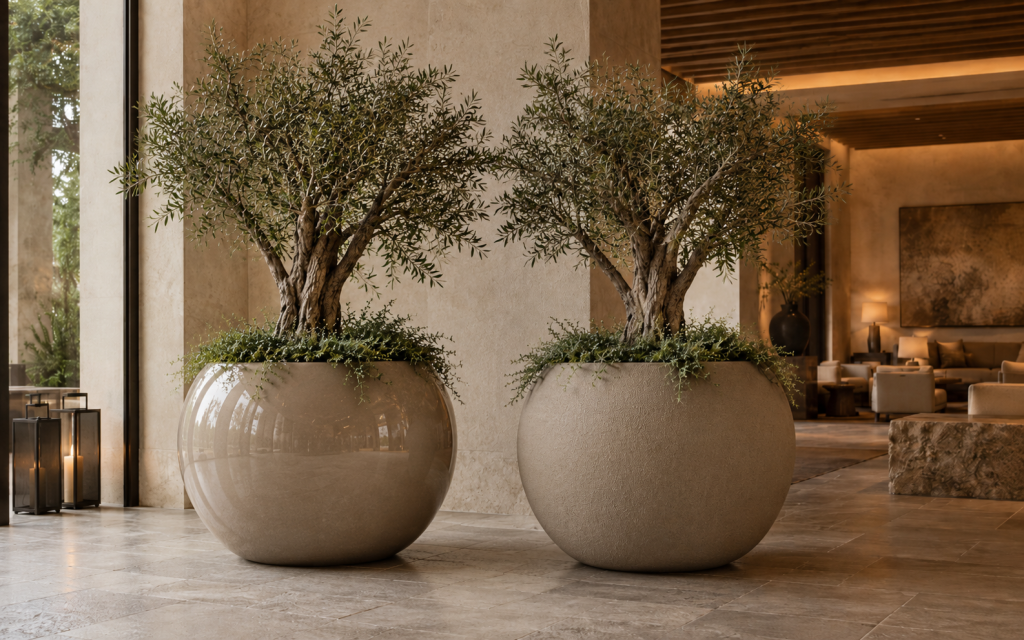
A glossy surface reflects light, which makes a planter feel larger and more polished in a photograph, and that mattered when so many finishes were chosen from a rendering rather than in person. Gloss also hid minor surface imperfections well, which made it a safe, forgiving specification for large production runs.
Matte Planter Finishes: What Is Actually Driving the Shift
Interiors have moved toward warmer, more tactile material palettes, raw plaster, honed stone, textured timber, fabrics with visible weave. A high gloss planter increasingly reads as out of step next to those materials, too reflective, too smooth, too obviously synthetic. Matte planter finishes sit more comfortably alongside this material language, absorbing light rather than bouncing it back.
Textured Planter Surfaces UAE Designers Are Specifying More Often
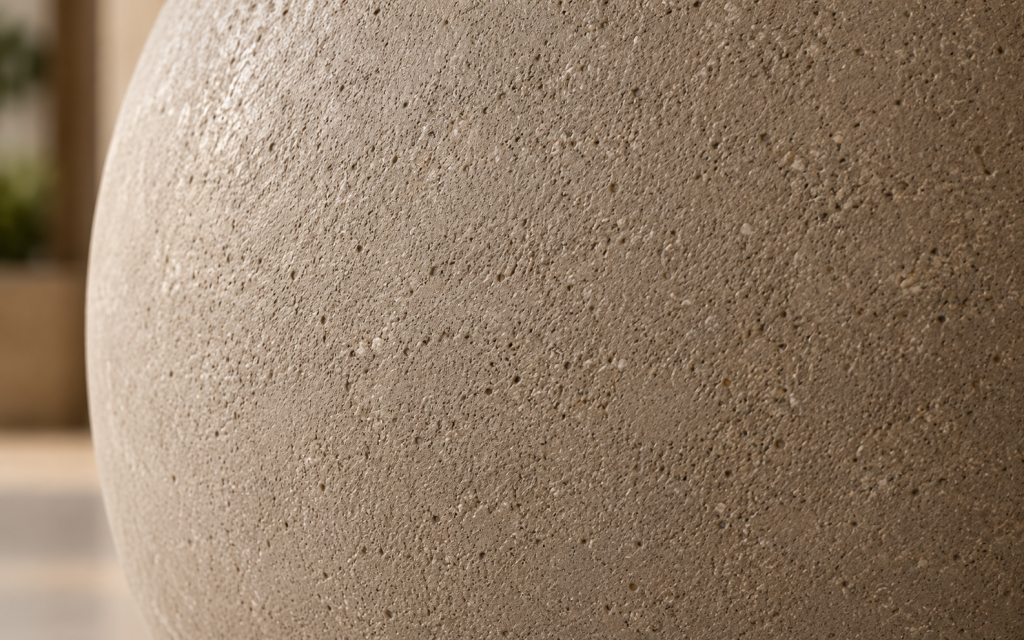
Beyond flat matte, a growing number of specifications now call for genuinely textured surfaces, a raw, slightly irregular finish that reads as handmade rather than mass produced. Raw finish GRC planters in particular can carry this texture convincingly, since the material itself has a naturally stone like quality that a textured finish only reinforces.
Where a High Gloss Planter Alternative Works Best
Matte and textured finishes tend to suit earthy, biophilic and naturalistic interiors particularly well, spaces built around planting, natural stone, wood and soft lighting. A high gloss planter alternative in matte or textured form can also perform better outdoors in the UAE climate, since a glossy surface shows dust, water spotting and sun glare far more readily than a matte one does under direct sunlight. Maintenance is a practical factor too, a matte or textured surface tends to hide fine scratches and everyday wear far better than a glossy one, which shows every mark clearly under bright light.
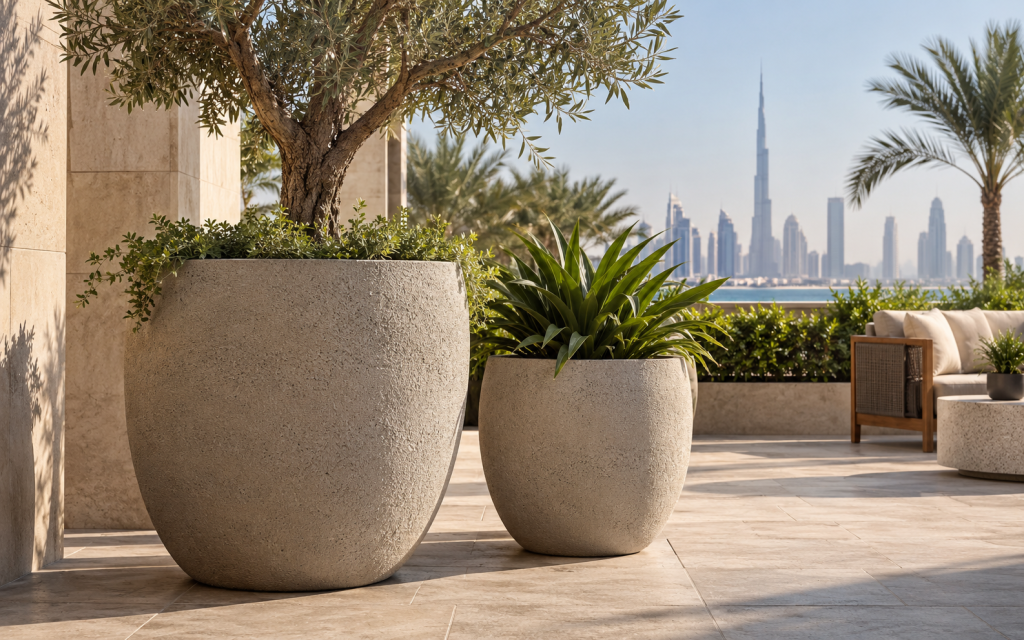
- Reduces Sun Glare
- Hides Dust & Water Spotting
- Hides Fine Scratches
Where Gloss Still Has a Place
Gloss has not disappeared entirely. In some retail and hospitality settings, a glossy statement piece still works precisely because it stands apart from a more textured surrounding palette, a single reflective accent rather than the default across an entire scheme. The distinction now is intentional contrast, not a default finish applied without much thought. A gloss planter used this way tends to sit alone, doing one clear job, rather than repeating across every planter in a scheme the way it once did.
Planter Finish Trends 2026: What This Means for Specification
For architects and interior designers building a materials palette, treating planter finish as part of that palette from the outset, rather than a separate decorative decision made later, produces a more coherent result. Tactile planter design choices made alongside flooring, wall finishes and furniture selections tend to read as intentional in a way that a finish chosen in isolation rarely does.
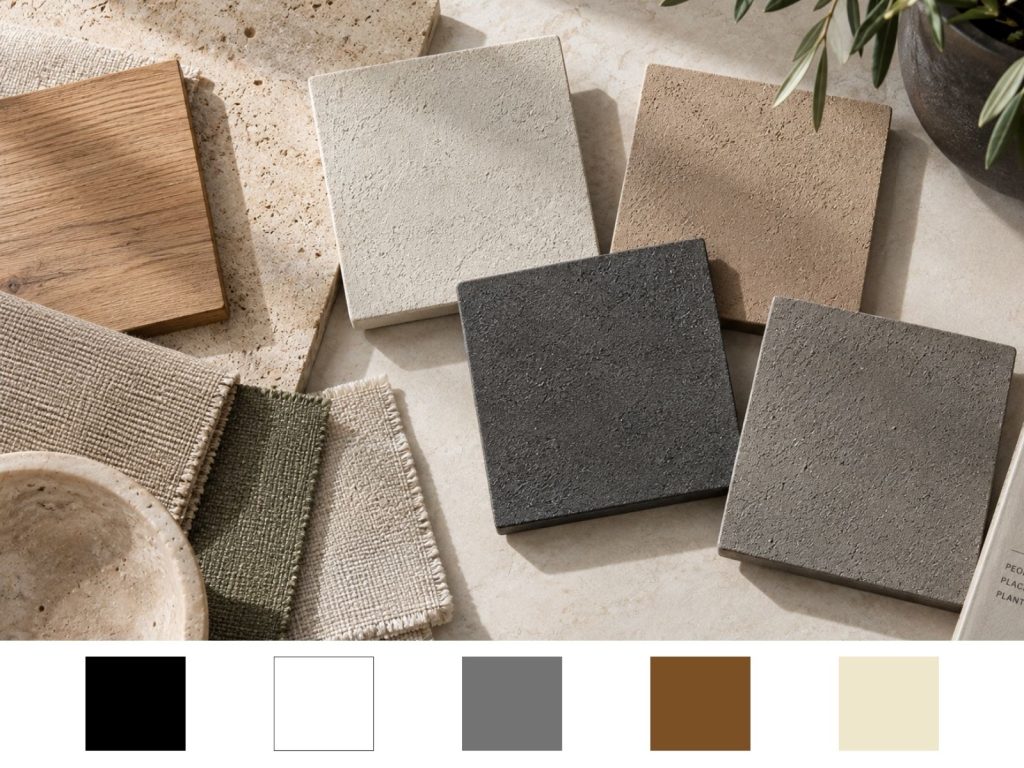
Desert Pottery offers both bespoke matte and textured finishes across its GRC and GRP ranges, matched to a project’s wider material palette rather than selected from a generic swatch.
Get in touch here
Talk through finish options for your next specification.