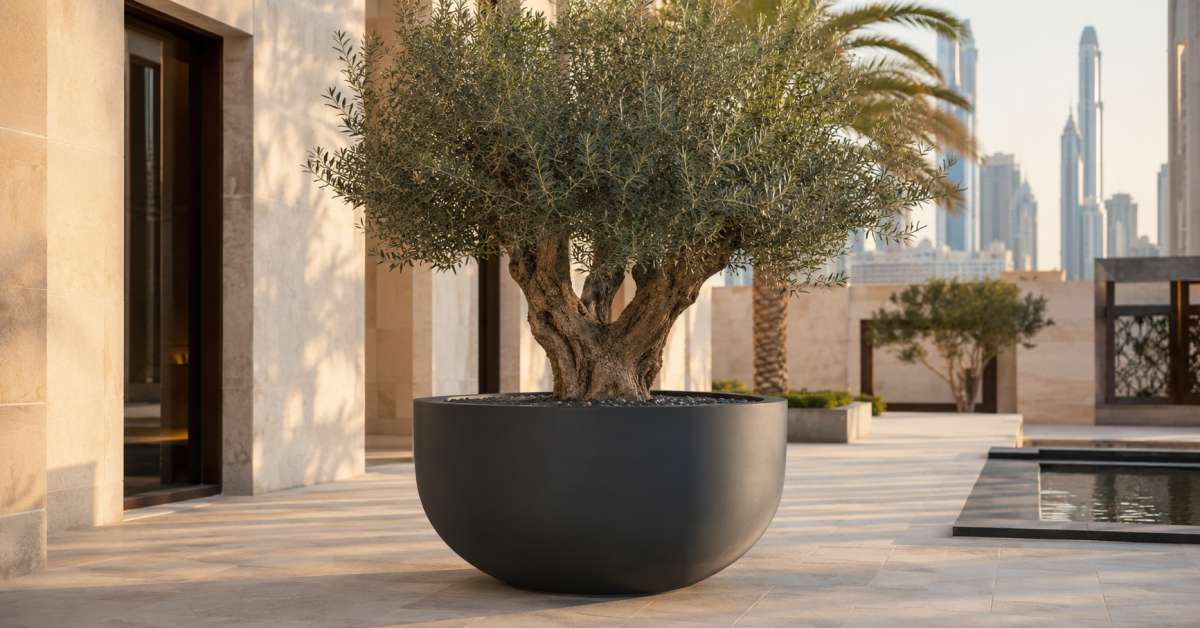
1. UV and Surface Care
GRP’s gelcoat finish is UV-stabilized, but constant sun exposure will still dull a glossy surface over years of exposure, a process known as chalking. This is one of the most overlooked parts of GRP planter maintenance.
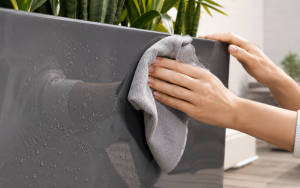
Every four to six weeks, wipe the surface down with a soft cloth and a mild soap and water solution. Avoid abrasive pads, which scratch the gelcoat and accelerate dulling. Avoid solvent-based cleaners too, since they can strip the surface finish. For matte or textured finishes, a soft bristle brush handles dust build-up better than cloth alone.
GRC, being a cement-based composite, is more forgiving on UV but benefits from an occasional rinse to prevent mineral staining from hard water irrigation.
2. Dust and Sandstorm Recovery
After a sandstorm, resist the urge to wipe planters dry. Dust acts like sandpaper against a dry gelcoat.
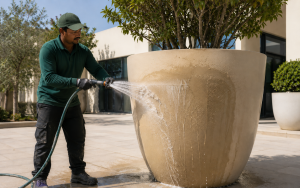 Rinse with water first to lift loose particles, then wipe or lightly scrub once the surface is wet. For textured GRC planters, a garden hose on moderate pressure gets into grooves that a cloth cannot reach.
3. Drainage Checks
This is the maintenance step most commonly skipped, and the one that causes the most damage.
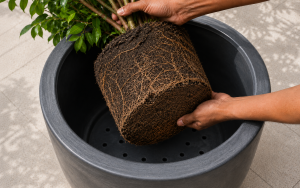
Check monthly that drainage holes have not clogged with root growth, soil compaction, or debris blown in by wind. Blocked drainage in high heat leads to root rot faster than people expect, since irrigation systems are often running daily.
For planters on hard flooring such as lobbies, podiums, and retail spaces, confirm the riser feet or drainage trays are still elevating the base. Standing water against GRP is fine short term, but constant contact can trap heat and moisture against the base seam.
4. Seasonal Structural Checks
Twice a year, ideally before summer in March or April and again after summer in October, do a full walk through.

Check for hairline cracks at planter seams or corners, particularly on larger GRC units subject to thermal expansion. Inspect any planters near pool decks or water features for chlorine or salt residue, which can affect the finish over time if not rinsed regularly. Re tighten or inspect any planters with internal steel reinforcement or anchoring, common in tall or freestanding hospitality installations, for corrosion at fixing points.