Restaurant Terrace Planters: Preparing Outdoor Dining for the UAE Winter Season
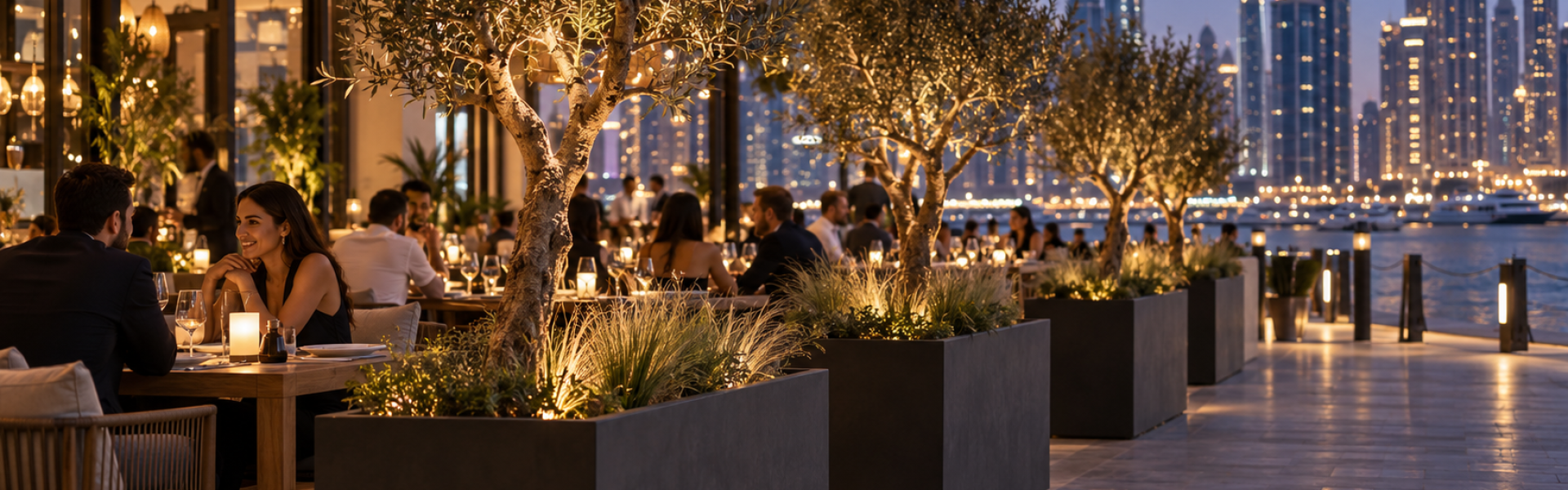
As temperatures ease across the UAE, restaurants and cafés begin reopening their terraces for the busiest outdoor dining months of the year. Guests return to the open air expecting comfort, shade and a sense of place, and operators often have only a few weeks to get the space ready. Restaurant terrace planters play a larger part in that preparation than many teams expect. They define the footprint, soften hard edges, buffer breezes, and carry the brand towards the street. Planning them early, with the full season in mind, avoids rushed purchases that look temporary by December.
Why the Winter Season Changes How a Terrace Works
For much of the year, many UAE terraces sit closed or lightly used. When the cooler months arrive, they quickly become some of the most valuable covers a venue has. Average winter highs sit in the mid twenties Celsius, with light to moderate winds and occasional stronger northwesterly gusts, based on figures from the National Centre of Meteorology.
That shift brings longer dwell times, more evening service and varied weather within a single week. A terrace that worked as an occasional overflow area now needs to perform every night, and the planters around it carry much of that load.
Planning Restaurant Terrace Planters Around the Approved Footprint
In Dubai, outdoor seating for restaurants and cafés is regulated, and the Dubai Municipality Outdoor Seating Area Guideline sets out how these spaces should be organised. Before choosing styles or plants, confirm the approved seating area and any requirements for keeping pedestrian routes clear.
Planters are often the most practical way to mark that boundary without fixed construction. A consistent line of containers signals where the terrace begins, keeps furniture within its permitted zone and gives staff a clear edge to work to during busy service. Because they sit on the boundary, restaurant terrace planters are also the first part of the venue that people walking past will notice, so their scale and finish matter.
Comfort, Wind and Stability
Winter evenings are pleasant, but open terraces can still catch breezes, particularly on waterfronts, rooftops and corner plots. Taller planters with dense planting can soften the effect of moderate wind on seated guests, although they should not be treated as a structural windbreak.
Stability deserves attention for the same reason. GRP is significantly lighter than concrete, which makes positioning and rearranging far easier, but a tall, lightly planted container in an exposed spot may need added ballast or a wider base. Discuss height, footprint and exposure with your supplier at the design stage rather than adjusting after installation.
Choosing Sizes, Plants and Layout for Outdoor Dining
Height and scale
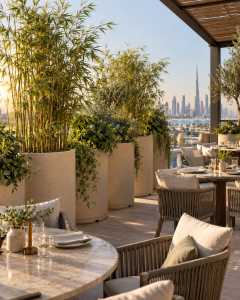
Low troughs work well along seating edges where guests want an open view, while taller vessels suit corners, entrances and screening points. Combining two or three heights creates rhythm along a long frontage without cluttering circulation. Where a view of the water or street is part of the experience, keep low planters below seated eye level.
Planting for the season
Select planting with your landscaping partner, considering sun, shade and how the terrace will be used once the season ends. Generous soil volume supports healthier plants, so containers should be sized for the planting as well as for appearance.
Layout and guest flow
Planters can separate dining zones, frame a bar counter or create a quieter corner for longer stays. Our article on how hospitality planters shape guest flow explores these principles in more depth.
Carrying the Brand Onto the Terrace
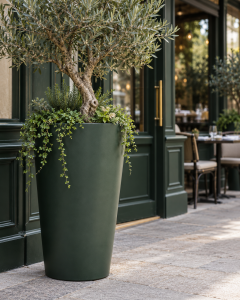
A terrace is often the most visible part of a restaurant from the street. Bespoke GRP planters can be made to specific dimensions, shapes and finishes, so containers can match the interior palette, signage colours or façade materials instead of looking like generic additions. Our guidance on choosing colour and finish for GRP planters can help design teams coordinate early. Consistency matters more than any single statement piece, because a repeated form in a considered finish reads as part of the architecture.
Planning Beyond the Season
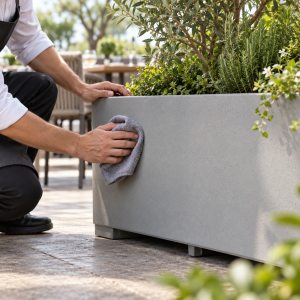
When temperatures rise again, many terraces reduce service or close. Lighter GRP containers are easier to relocate, store or reconfigure for a summer layout. Agreeing a storage location before the season starts saves time when it ends. Simple routines also protect the investment, and our seasonal care guide for GRP planters covers cleaning, drainage checks and inspections suited to Dubai’s climate.
Ready for the Busiest Months Outdoors
Restaurant terrace planters influence how a winter terrace looks, how it is used and how comfortable guests feel during longer evenings outdoors. Planning them around the approved footprint, local exposure, planting needs and brand identity helps the space work from the first weekend of the season. Desert Pottery designs and manufactures bespoke GRP planters in the UAE, drawing on Desert Group’s long experience in horticulture and landscaping. To discuss sizes, finishes or a custom design for your terrace, contact our team.