Water Efficient Planters: How to Cut Water Use in UAE Landscapes
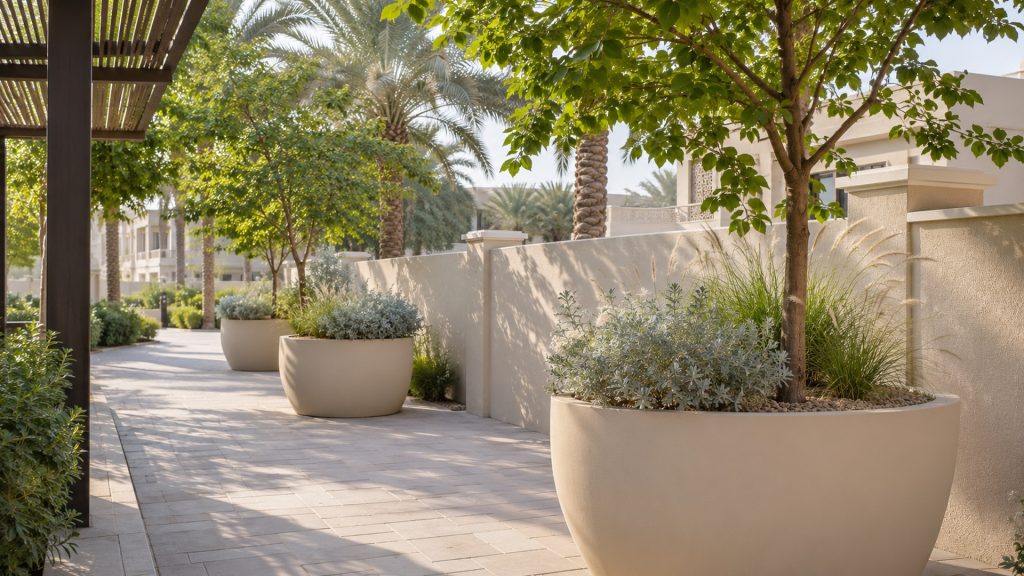
Plants in planters lose water faster than plants in open ground. The soil volume is limited, the sides of the planter heat up in the sun and there is nowhere for roots to search for moisture. In the UAE, that can make planters one of the thirstier parts of a landscape unless they are designed with care. Water efficient planters are not a single product. They are the result of several decisions made early: which plants go in, how much soil they get, how water enters and leaves, and what protects the surface from the sun. Get those right and the savings last for the life of the scheme.
Why Water Use in Landscaping Is Under Closer Scrutiny
Water is a national priority. The UAE Water Security Strategy 2036 aims to reduce total demand for water resources by 21 percent, and landscaping is one of the places where that ambition becomes practical. In September 2026, Dubai Municipality launched its Greenery and Plantation Manual 2026, which gives planners, designers and irrigation professionals guidance on water efficient landscape design, sustainable irrigation and the use of native and adaptive species. For developers and contractors, this means planting choices are increasingly reviewed for long term water demand, not just appearance on handover day.
Start With the Right Plants
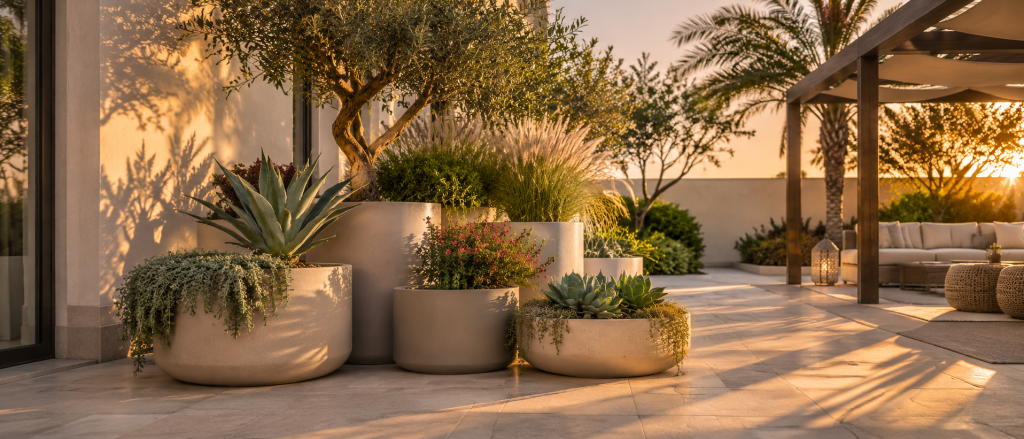
Plant selection has more influence on water use than any other decision. A review of landscaping with native plants in the UAE, published by researchers at UAE University, found that many local landscapes still rely on exotic species with high water needs, while native plants cope with heat, salinity and limited water.
Not every native species suits a container, however. The ghaf, for example, relies on a very deep root system to reach groundwater, which no planter can provide. Choosing adapted shrubs, grasses and smaller trees with a horticulture specialist gives better results than picking from a list of natives alone.
Size the Planter for the Plant and the Climate
Small planters dry out quickly in the heat, and that leads to frequent watering cycles. A larger soil volume holds moisture for longer and gives roots room to establish, which usually means less water over time. Deeper planters also shield roots from the heat that builds up near the soil surface. Our guide to choosing the right planter size explains how to match container volume to the plant’s root spread and mature height.
Why Drainage Matters in Water Efficient Planters
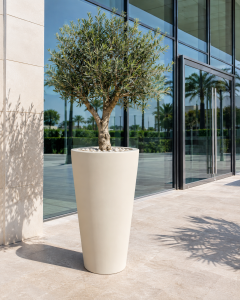
It sounds contradictory, but good drainage saves water. Overwatering is one of the most common reasons container plants fail, according to RHS guidance on container maintenance, and soil that stays waterlogged starves roots of the air they need. Clear drainage holes, a drainage layer and raised feet keep the root zone healthy. Our seasonal care guide for GRP planters includes simple drainage checks for maintenance teams.
Plan Irrigation Into the Layout
Even well designed water efficient planters will waste water if irrigation is treated as an afterthought. Three habits make the biggest difference on site.
Coordinate drip lines early
Drip irrigation delivers water directly to the root zone with far less loss than spray systems. It works best when sleeves, entry points and valve positions are agreed before planters are placed, rather than threaded over the rim afterwards.
Group plants by water need
Planters with similar water demands should share an irrigation zone. Mixing thirsty and drought tolerant species on one line forces a compromise that overwaters one group or underwaters the other.
Adjust through the seasons
Irrigation timers set for August will overwater in January. Reviewing schedules as temperatures change is one of the simplest savings available.
Mulch, Shade and Finish
The RHS notes that mulching pots reduces water lost from the soil by evaporation, and that grouping planters creates shade and raises humidity around them. Both are easy to apply on UAE projects. Gravel or bark across the soil surface also keeps planters looking tidy.
Finish plays a part too. Lighter colours absorb less heat than dark ones, so a pale planter in full sun generally keeps its root zone cooler. Our guide to colour and finish for GRP planters covers the options, and bespoke GRP planters can be sized around irrigation layouts and planting plans from the start.
Small Decisions, Lasting Savings
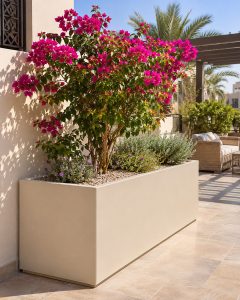
Water efficient planters come from joined up thinking: plants suited to the climate, enough soil to buffer the heat, drainage that keeps roots healthy and irrigation that matches real demand. None of these steps is complicated, but together they make a visible difference to how much water a landscape needs year after year. Desert Pottery manufactures GRP planters in the UAE and works with project teams on sizes and finishes that suit the planting. To plan planters for your next landscape, contact our team.