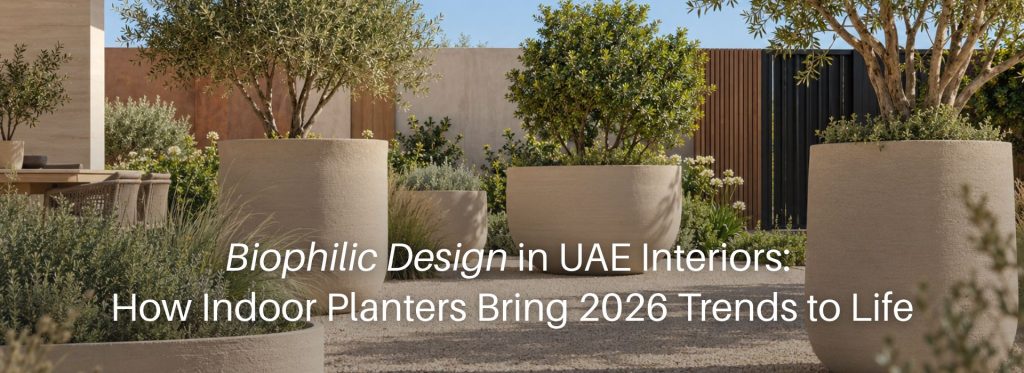
Biophilic design has moved well beyond adding a few plants to a finished room. In UAE offices, hotels and residences, designers are now treating greenery as part of the architecture, planned alongside materials, lighting and circulation from the earliest concept. The containers that hold that greenery matter as much as the plants themselves. Well chosen indoor planters for biophilic design influence how a space feels to the touch, how it reads at a distance and how comfortably it sits within a regional design language. This article looks at the trends shaping biophilic interiors in 2026 and what they mean for planter selection.
What Biophilic Design Means in 2026
Biophilic design is grounded in a simple idea: people respond positively to environments that connect them with nature. Much of today’s practice draws on frameworks such as the 14 Patterns of Biophilic Design from Terrapin Bright Green, first published in 2014 and now in an expanded tenth anniversary edition.
What is changing is how designers apply those ideas. In an overview of biophilic design trends for 2026 published by Design Middle East, Dr Belma Elsaej of Heriot Watt University Dubai highlights multisensory design, regenerative materials, biophilic minimalism and stronger cultural and regional expression. Each of these has direct implications for how planters are chosen and placed.
Biophilic Minimalism: Fewer Elements, Greater Impact
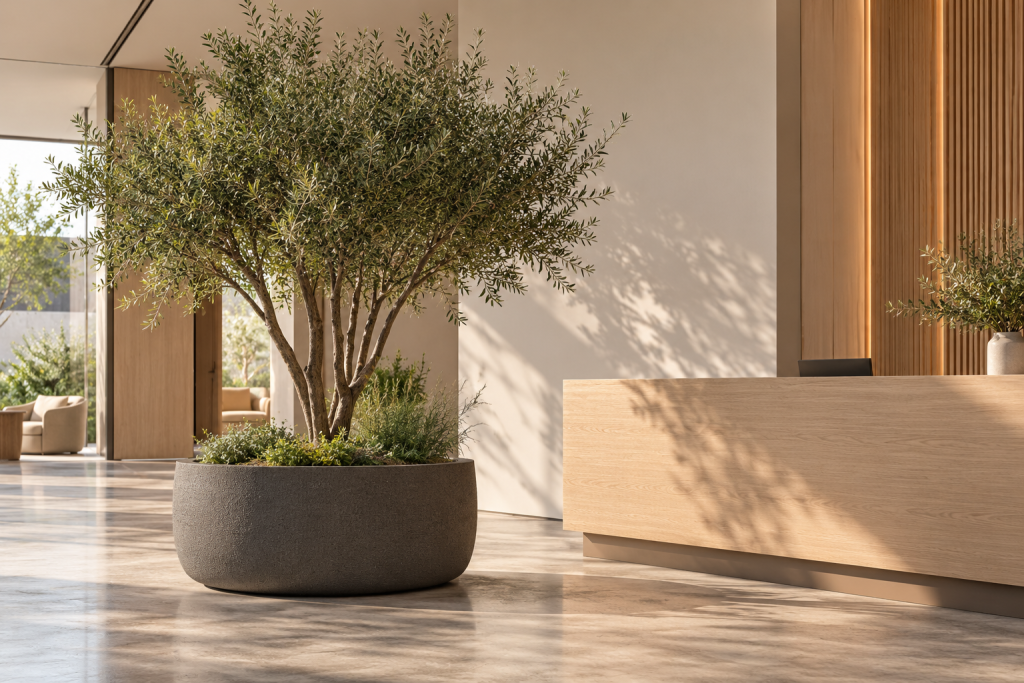
Rather than filling a room with greenery, many designers are using fewer natural elements with more presence. A single sculptural tree in a generous planter can anchor a lobby or reception more effectively than a scattered group of small pots, and it reduces visual clutter.
This approach places more weight on the container. When there are fewer pieces, each planter is seen as an object in its own right, so form, scale and finish need to be considered as carefully as any piece of furniture.
When specifying indoor planters for biophilic design, it helps to decide early which pieces will act as focal points and which will play a supporting role. Focal planters can carry a stronger form or finish, while supporting pieces repeat a simpler profile so the scheme stays coherent.
Choosing Indoor Planters for Biophilic Design
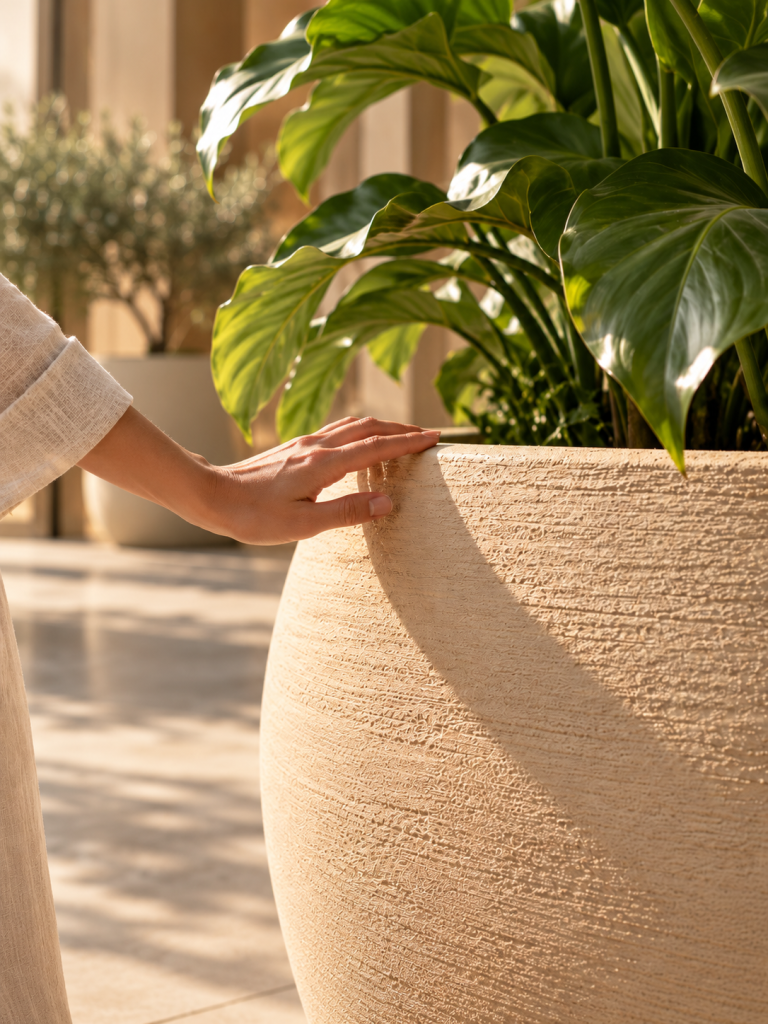
Texture and touch
Multisensory design asks spaces to engage more than sight. Matte, stone like and textured surfaces invite touch and soften the reflections that glossy finishes can create under artificial light. Our article on why matte and raw finishes are replacing high gloss planters explores this shift in more detail.
Proportion and plant fit
A planter that is too small undermines both the plant and the composition. Matching container volume to root growth and mature height keeps the arrangement balanced over time, and our guide to choosing the right planter size for any plant sets out the key considerations.
Materials and longevity
The move towards regenerative and circular materials encourages designers to ask how long each element will last and how it will age. Durable containers that hold their finish, resist moisture and can be refinished or reused in a later fit out support that thinking better than short life alternatives. Where sustainability credentials are part of the brief, request documented information from suppliers rather than relying on general claims.
Light and placement
Interest in lighting that follows natural daily rhythms is growing, but indoor plants still need adequate light to stay healthy. Planter positions should be agreed with the lighting designer and a horticulture specialist, so that species, light levels and maintenance access are resolved together rather than after installation. In deeper floor plates, supplementary grow lighting may be needed, and this is far easier to integrate when it is planned with the ceiling design.
Regional Expression in UAE Interiors
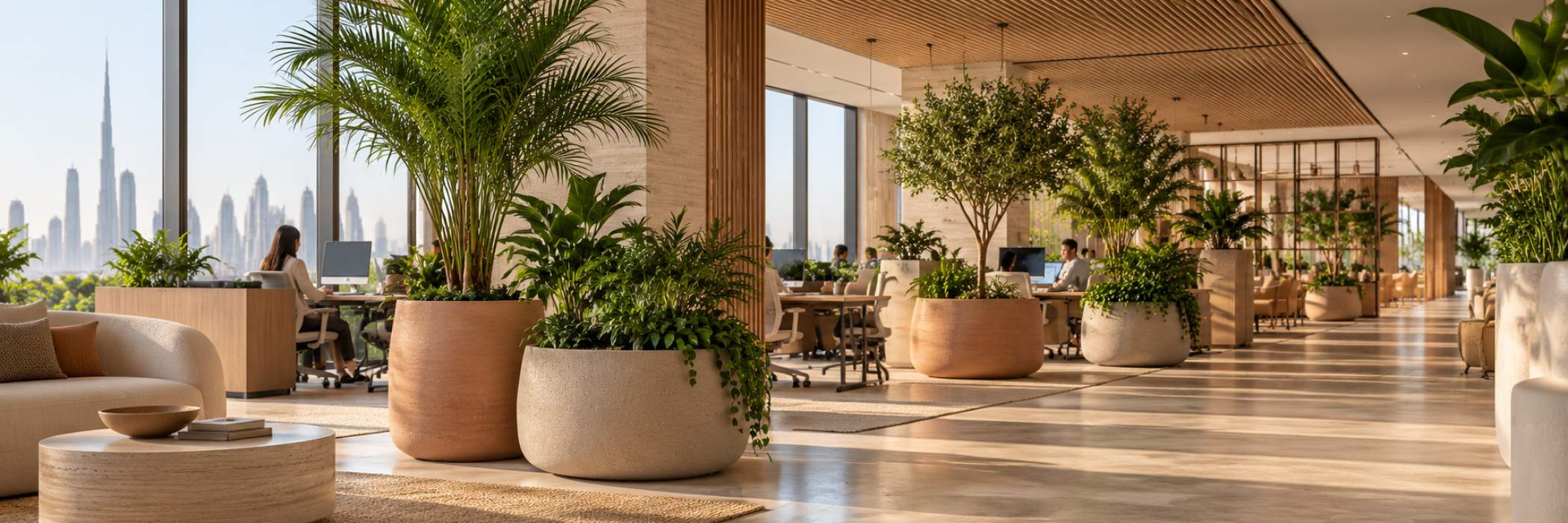
Biophilic design is increasingly expected to reflect its setting. In the UAE, that often means warm, sand inspired tones, earthy textures and forms that echo the desert landscape, combined with planting suited to indoor conditions in a hot climate.
Bespoke GRP planters make it possible to develop shapes, sizes and finishes for a specific project rather than adapting a catalogue piece. Coordinating planter colours with the wider material palette, as described in our guide to colour and finish for UAE projects, helps greenery feel integral to the interior. For projects that need planting design and ongoing care as well as containers, Desert Pottery also offers interior landscaping.
Designing Greener Interiors With Purpose
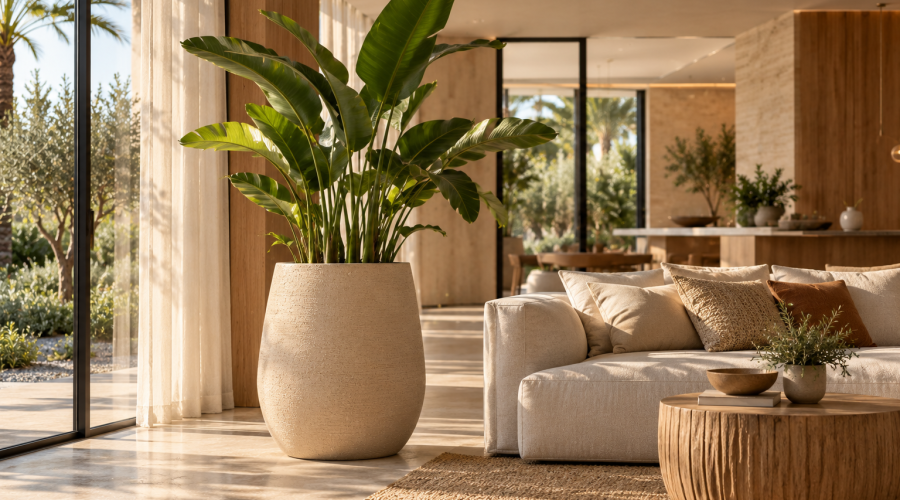
The biophilic trends of 2026 reward restraint, texture and context. Indoor planters for biophilic design work best when they are treated as architectural elements, sized for the planting, finished to suit the material palette and positioned with light and maintenance in mind. Considered decisions at design stage also make maintenance simpler, helping a biophilic scheme stay healthy long after handover. Desert Pottery manufactures bespoke GRP planters in the UAE for interior and outdoor projects. To discuss planters for your next interior scheme, contact our team.