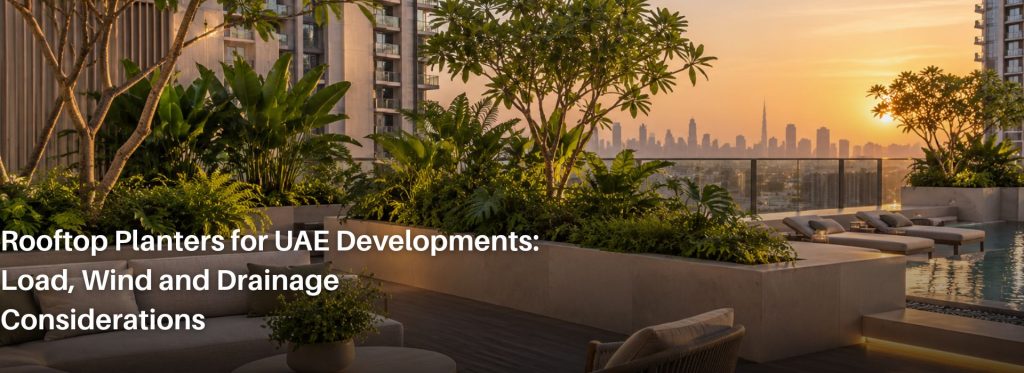
Roof terraces and podium decks are now among the most marketed spaces in UAE residential and mixed use developments. Buyers increasingly expect shared gardens above ground level, and developers are responding with landscaped amenity decks, sky gardens and planted rooftops. Rooftop planters make much of that greenery possible, but they sit on a structure designed for specific loads, face stronger wind and rest directly over waterproofing. Getting them right is a coordination exercise between landscape architects, structural engineers and contractors. This guide covers the decisions that matter most at the specification stage.
Why Rooftop and Podium Greenery Is Growing
Nature has become a central selling point in UAE real estate. Communities such as Ghaf Woods and Sobha Elwood place large scale planting at the heart of their masterplans, a shift described in Khaleej Times coverage of the forest living trend. In denser urban projects, the same demand moves upwards, and rooftop gardens and shared outdoor spaces are becoming more common in new Dubai developments, often on podium levels above car parks or retail.
Where ground space is limited, planted roofs and podiums give residents usable outdoor areas while softening the building’s appearance from neighbouring towers.
Load: The Planter Is the Smallest Part of the Equation
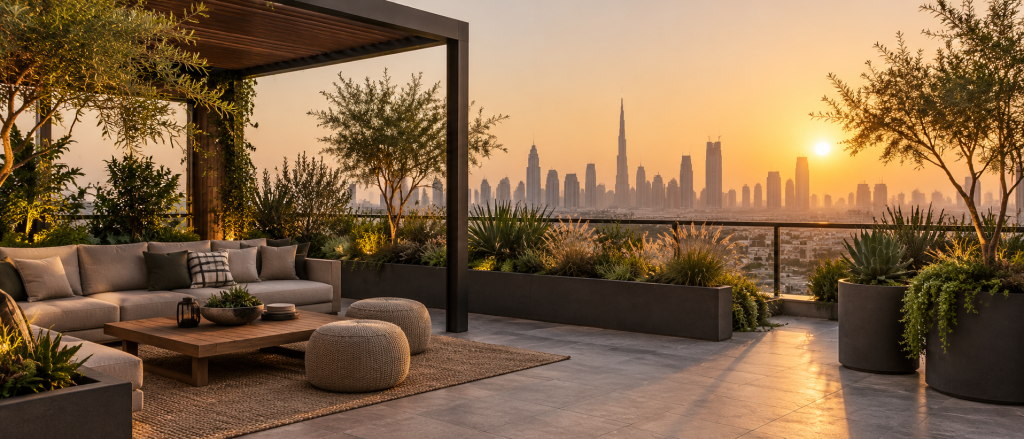
Discussions about rooftop planters often focus on the container, yet the planter itself is usually a small share of the total load. Saturated growing media, retained water, drainage layers and mature plants account for most of the weight, and that weight increases as trees grow.
GRP is significantly lighter than concrete, so choosing it reduces the load contributed by the containers and makes them easier to lift and position. It does not remove the need for structural verification. Every roof or podium layout should be checked by the project’s structural engineer, who can confirm permissible loads and may ask for heavier planters to sit over columns or beams. Structural design in the emirate is governed by the Dubai Building Code, so planter schedules should reach the engineer early, with sizes, soil volumes and expected mature plant weights where known.
Wind Exposure on Rooftop Planters
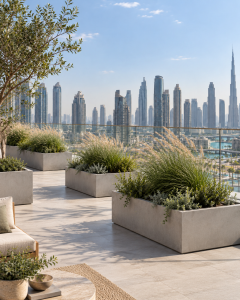
Wind speeds generally increase with height, and roof edges, corners and gaps between towers can create strong local gusts. A tall planter with a dense canopy behaves like a sail, so stability needs more attention at roof level than on the ground.
Practical measures include lower, wider planter forms in exposed zones, keeping tall planting back from parapet edges and agreeing fixing or ballast details where required. Plant selection matters too, as open, wind tolerant species generally suit exposed decks better than dense, broad canopies. Choosing the right planter size for each plant also supports stability, because a well proportioned container resists tipping more effectively.
Drainage and Waterproofing
Water is the most common source of long term problems on roofs and podiums. Every planter needs a clear path for excess water to leave the container and reach the building’s drainage system without ponding against the waterproofing membrane.
Protecting the membrane
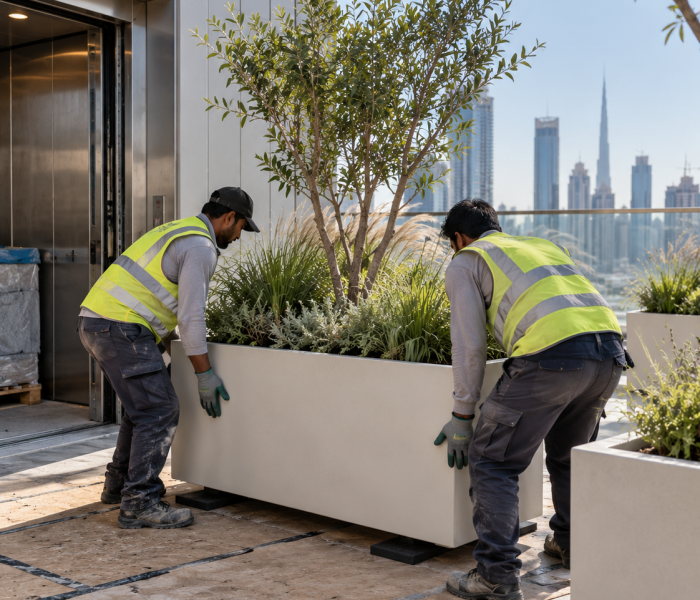
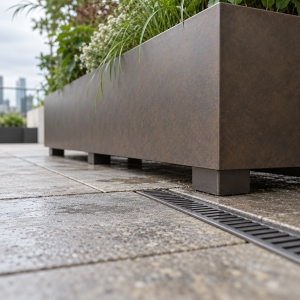
Raised feet or pedestals lift the planter off the deck, allowing water to flow beneath and reducing the risk of damage to the membrane. Planters should be lifted into position, never dragged across a finished roof.
Inside the planter
A drainage layer and filter fabric help keep fine soil out of outlets, while drainage holes should be sized and positioned to suit the planting. Our seasonal care guide for GRP planters includes routine drainage checks, which are especially important at height, where a blocked outlet can go unnoticed for weeks.
Access, Installation and Bespoke Sizing
Moving planters to roof level depends on lift dimensions, crane availability and access routes through the building. Lighter GRP containers are easier to handle once on site, and bespoke GRP planters can be made to dimensions that suit service lifts, structural grids and irrigation layouts. For feature pieces, our article on oversized statement planters explores how scale is shaping UAE landscapes, although large pieces at height need particular care with load and wind.
Irrigation should be planned alongside the planter layout. Drip lines, sleeves and valve positions are easier to coordinate before planters are placed, and maintenance teams need safe access to every container for pruning, cleaning and inspections. On larger decks, a simple planting and irrigation plan shared with the facilities team helps keep the landscape healthy after handover.
Planning Rooftop Planters With the Whole Team
Rooftop planters can turn a bare roof or podium into one of a development’s most valued spaces, provided load, wind and drainage are resolved before installation. Involving the structural engineer, landscape architect and planter manufacturer early avoids costly redesign later. Desert Pottery manufactures bespoke GRP planters in the UAE and can work with your project team on sizes, forms and finishes suited to elevated landscapes. To discuss your rooftop or podium project, contact our team.