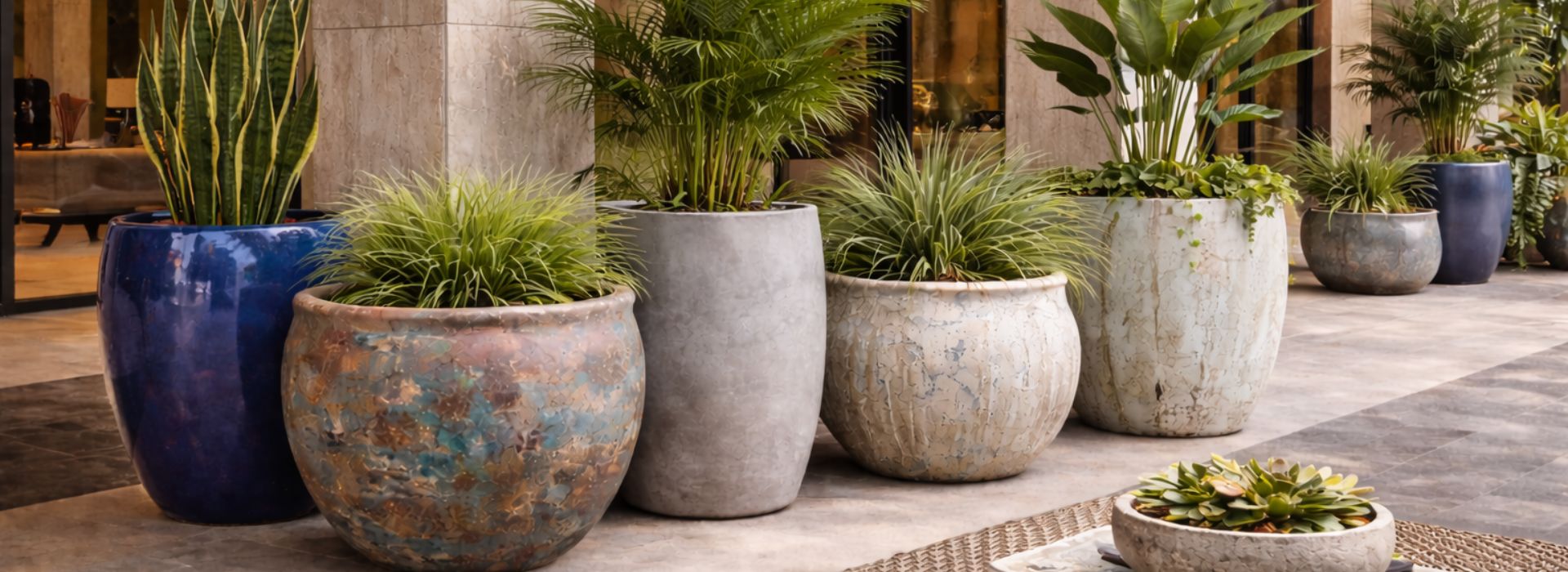
When architects specify planters, the decision goes far beyond how a pot looks in a render.
While aesthetics may catch the eye early on, real planter selection happens at the intersection of performance, practicality, and long-term suitability. From weight calculations and durability to drainage logic and site conditions, planters are treated as architectural components — not décor.
This article breaks down how architects actually think when choosing planters, mapping the decision-making process from concept stage to final specification.
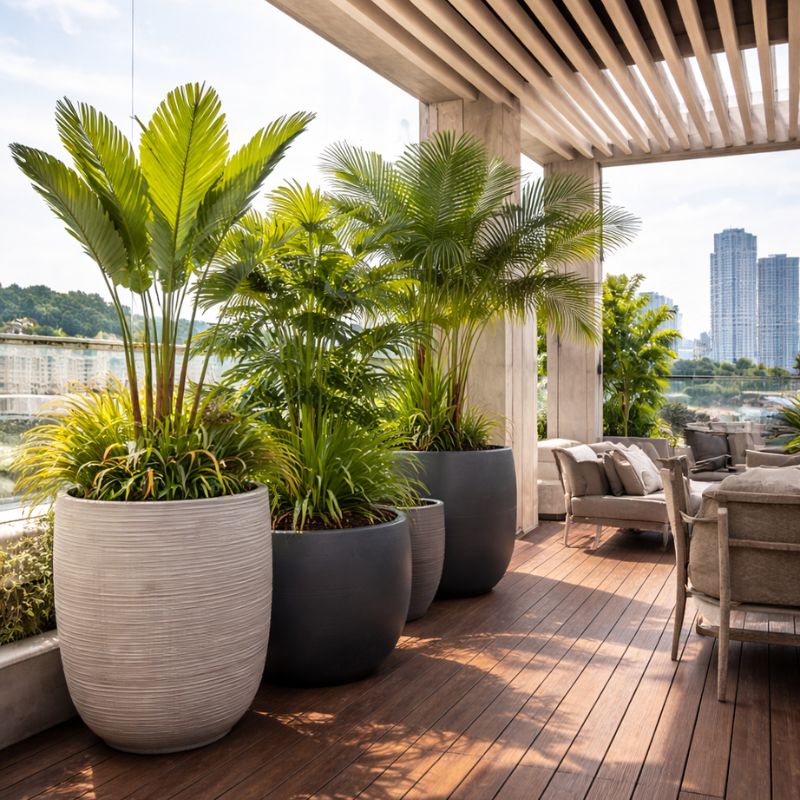
Stage 1: Where Will This Planter Sit and How Will It Be Used?
Before material or colour is even discussed, architects assess where and how the planter will be used.
Key questions include:
- Is the planter indoors, outdoors, or semi-exposed?
- Will it sit on grade, on a podium, or on a suspended slab?
- Is the location subject to heat, wind, salt air, or heavy foot traffic?
- Is it part of a permanent installation or a flexible layout?
These early considerations immediately narrow down suitable planter types and materials.
Stage 2: What Materials Will Perform Without Creating Structural Risk?
This is where aesthetics takes a back seat.
Architects evaluate planter materials based on:
- Weight (empty and planted) – critical for balconies, rooftops, and podiums
- Structural strength – resistance to cracking, warping, or deformation
- Weather resistance – UV stability, heat tolerance, and moisture behaviour
- Longevity – how the material ages over time
Lightweight yet strong materials, such as GRP or engineered composites, are often favoured in commercial and hospitality projects where structural limits matter.
Stage 3: How Will This Planter Behave Once It’s Planted and Irrigated?
A planter that looks good but fails to manage water properly will not survive long on a real project.
Architects and consultants assess:
- Drainage hole placement and sizing
- Internal root space depth
- Compatibility with irrigation systems
- Overflow and water retention behaviour
- Protection of surrounding finishes and waterproofing layers
Poor drainage leads to root rot, staining, slab leakage, and maintenance headaches — all of which architects actively design to avoid.
Stage 4: What Happens After Project Handover?
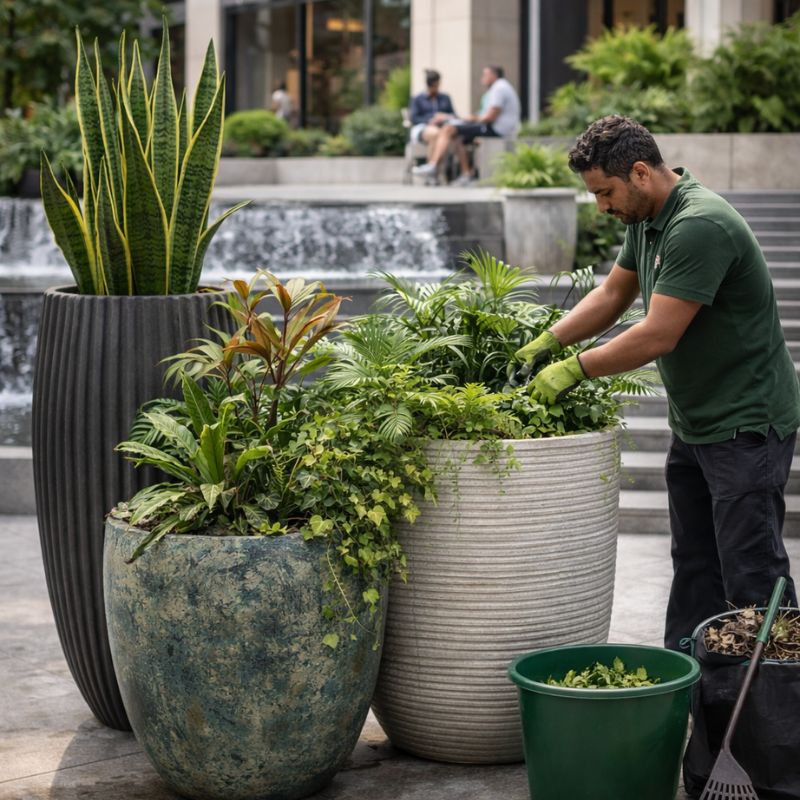
One of the most overlooked factors in planter selection is operational reality.
Architects consider:
- Ease of plant replacement
- Accessibility for maintenance teams
- Cleaning requirements
- Resistance to staining, algae, and surface damage
Planters in high-traffic or hospitality environments must hold up under frequent care without losing their finish or structural integrity.
Frequently Asked Questions
Why Architects Value Specification-Ready Planter Partners
Architects don’t just look for products. They look for clarity, reliability, and technical confidence.
What adds value at specification stage:
- Clear material data and weight guidance
- Size consistency and customization options
- Proven performance across real projects
- An understanding of how planters function within built environments
When planters are engineered with architectural realities in mind, they become easier to specify — and easier to approve.
Why This Matters for Real Projects
When planters are specified correctly at the right stage, they support both design intent and long-term performance:
- Structural risks are reduced, particularly on podiums and suspended slabs
- Drainage and waterproofing issues are minimized
- Plant health and longevity improve
- Maintenance interventions become simpler and more predictable
- The original design intent is preserved well beyond project handover
Why Desert Pottery Fits the Way Architects Think
Desert Pottery approaches planter design with the same logic architects apply to the built environment — balancing performance, practicality, and visual intent from the outset. Rather than treating planters as decorative afterthoughts, each piece is developed with an understanding of weight considerations, material behaviour, drainage requirements, and long-term use in real projects. This allows design teams to specify with confidence, knowing that the planter will integrate seamlessly into architectural layouts, withstand site conditions, and maintain its integrity over time. The result is a specification-ready solution that supports both creative vision and operational reality.
Do architects choose planters themselves?
Often yes, but decisions are typically made in coordination with landscape consultants, interior designers, and contractors.
Why is planter weight so important?
Weight affects structural load, especially on podiums, rooftops, and suspended slabs. Lightweight materials can prevent costly redesigns.
Are custom planters commonly specified?
Yes. Custom sizing and finishes allow planters to integrate seamlessly into architectural layouts and spatial planning.
When should planters be considered in a project?
Ideally during early design development, not at the styling or procurement stage.
Where Design Meets Performance
If you’re specifying planters for a commercial or architectural project, Desert Pottery supports design teams with planter solutions built for real-world performance and long-term use.