Behind the Mould: How a Bespoke GRP Planter Actually Gets Made
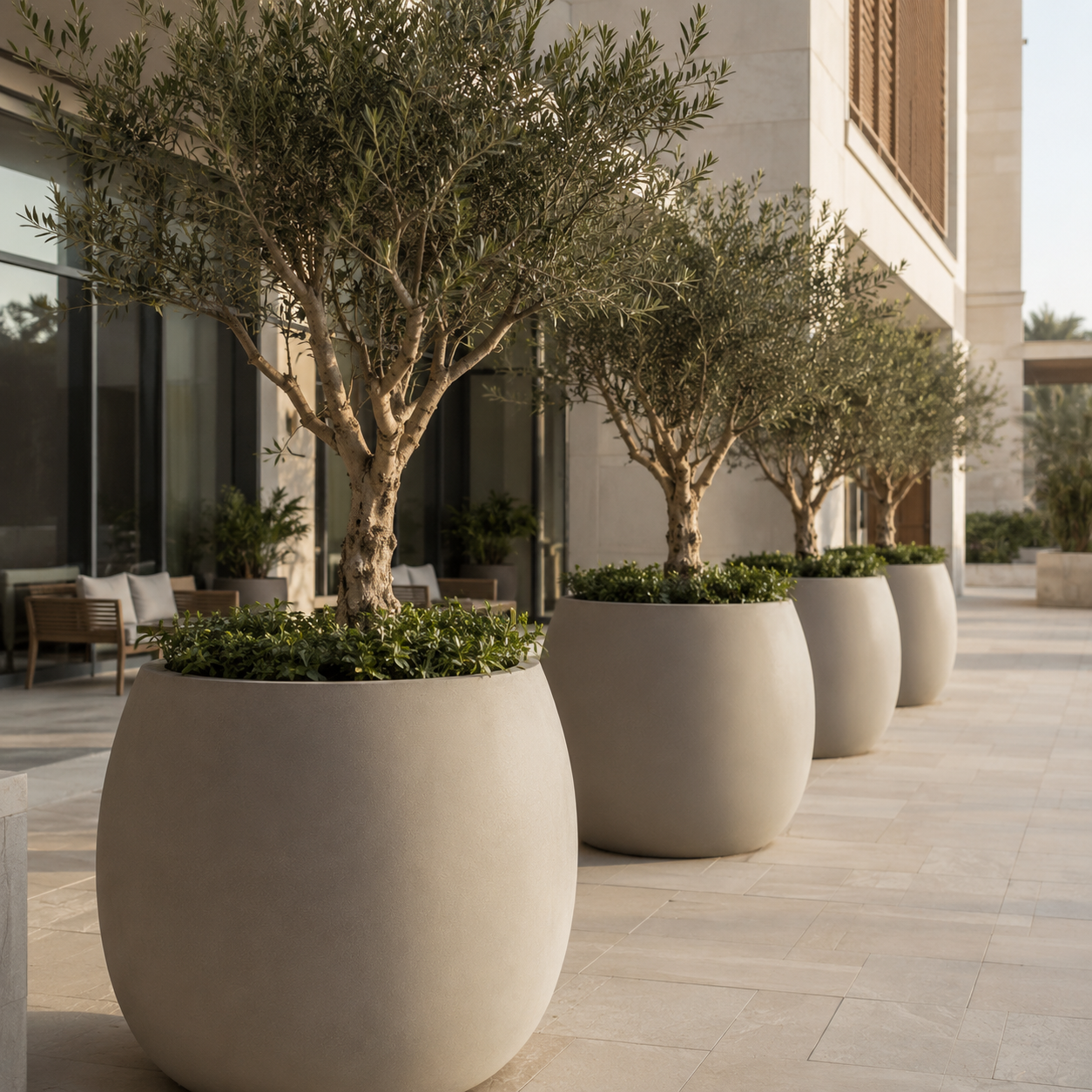
A finished planter on site looks simple, a clean form, a consistent finish, a colour that matches the brief. What that finished piece hides is a production process most architects never see. Bespoke GRP planter manufacturing UAE projects rely on moves through several distinct stages before anything ships, and understanding that process, rather than treating the planter as an off the shelf product, is what helps a design team specify with realistic expectations on both quality and timeline.
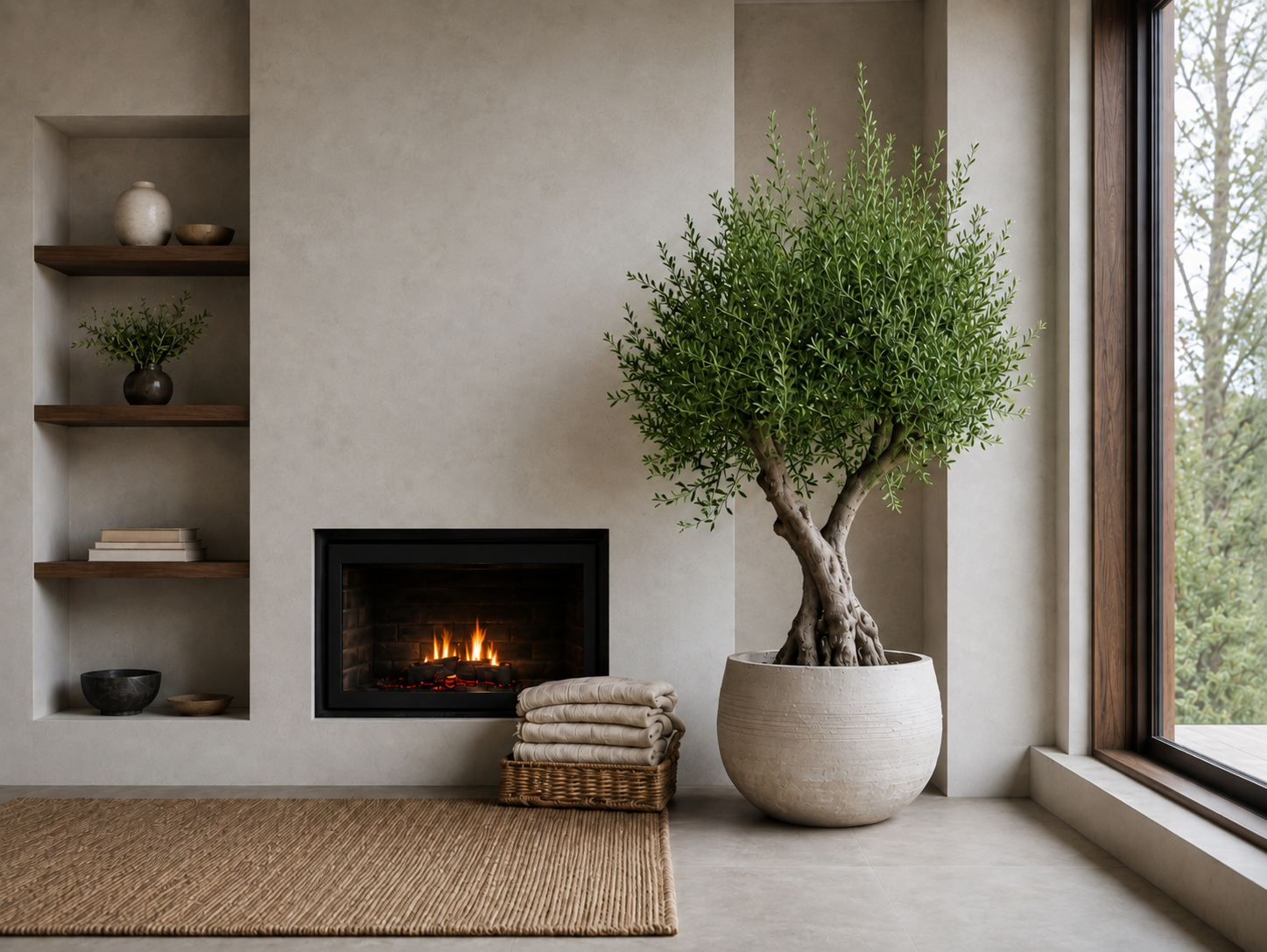
Why the Process Matters to Architects and Designers
A planter specified without understanding how it is actually made tends to run into two problems later, an unexpected lead time or a finish that does not match what was pictured. Knowing what happens between the concept sketch and the finished piece gives a design team the context to ask better questions at the brief stage, before those questions become change orders.
Step One: From Concept Sketch to Technical Drawing
Every bespoke piece starts as a sketch or a reference image, translated into a full technical drawing with exact dimensions, wall thickness, drainage points and mounting requirements. This stage is where a striking concept gets tested against practical constraints, can this form actually hold its shape at scale, does the wall thickness need to increase for a piece this large, where does water need to exit. Getting this stage right prevents costly revisions once the mould is already underway.
Bespoke GRP Planter Manufacturing UAE: Building the Mould
Once the technical drawing is approved, the mould making process begins. This is arguably the most labour intensive stage of the entire build, since the mould determines the precision of every planter produced from it, not just the first one.
Mould Making, Where Precision Is Set
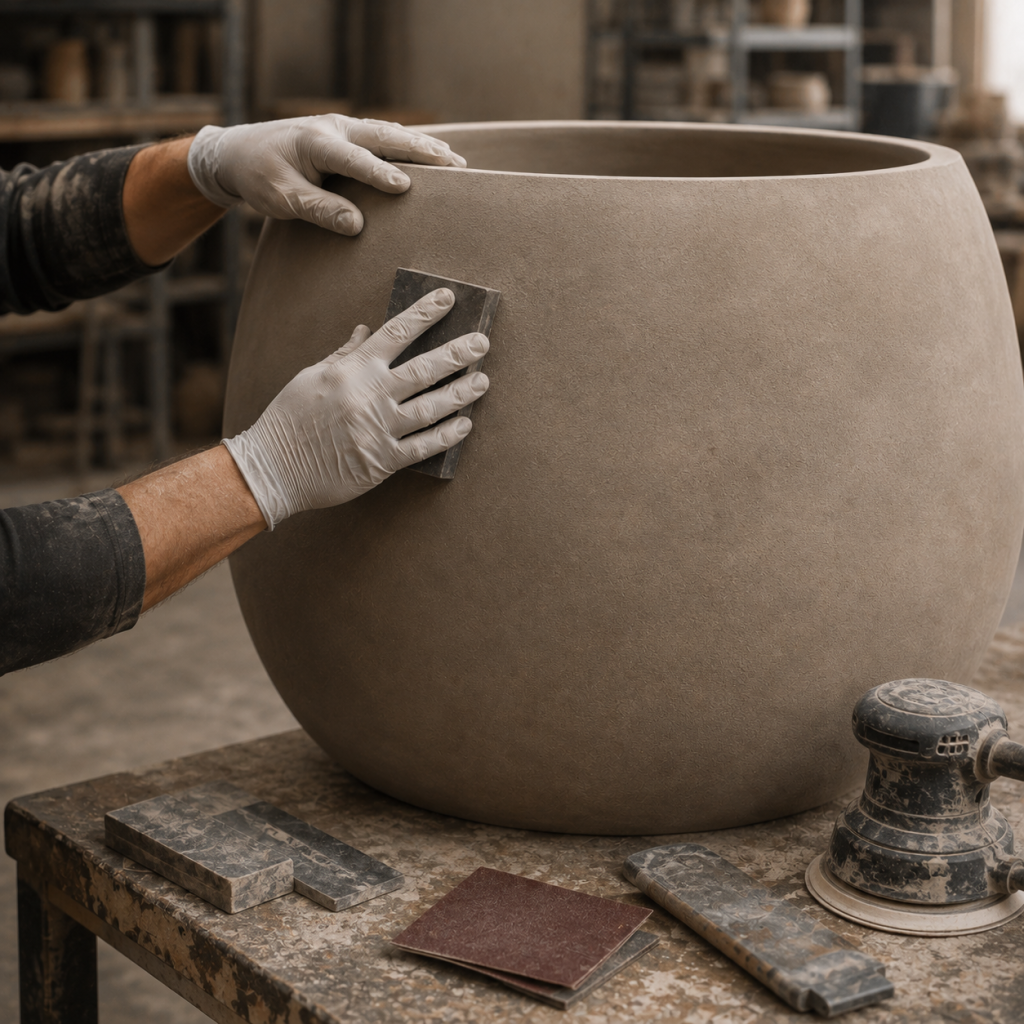
A master pattern is built by hand or CNC machined, then used to create the mould itself. Every seam line, curve and surface texture on the final planter traces back to decisions made at this stage. A rushed or imprecise mould shows up in every single piece cast from it, which is why this step typically takes longer than people expect from the outside.
Layup and Curing, Where Strength Is Built
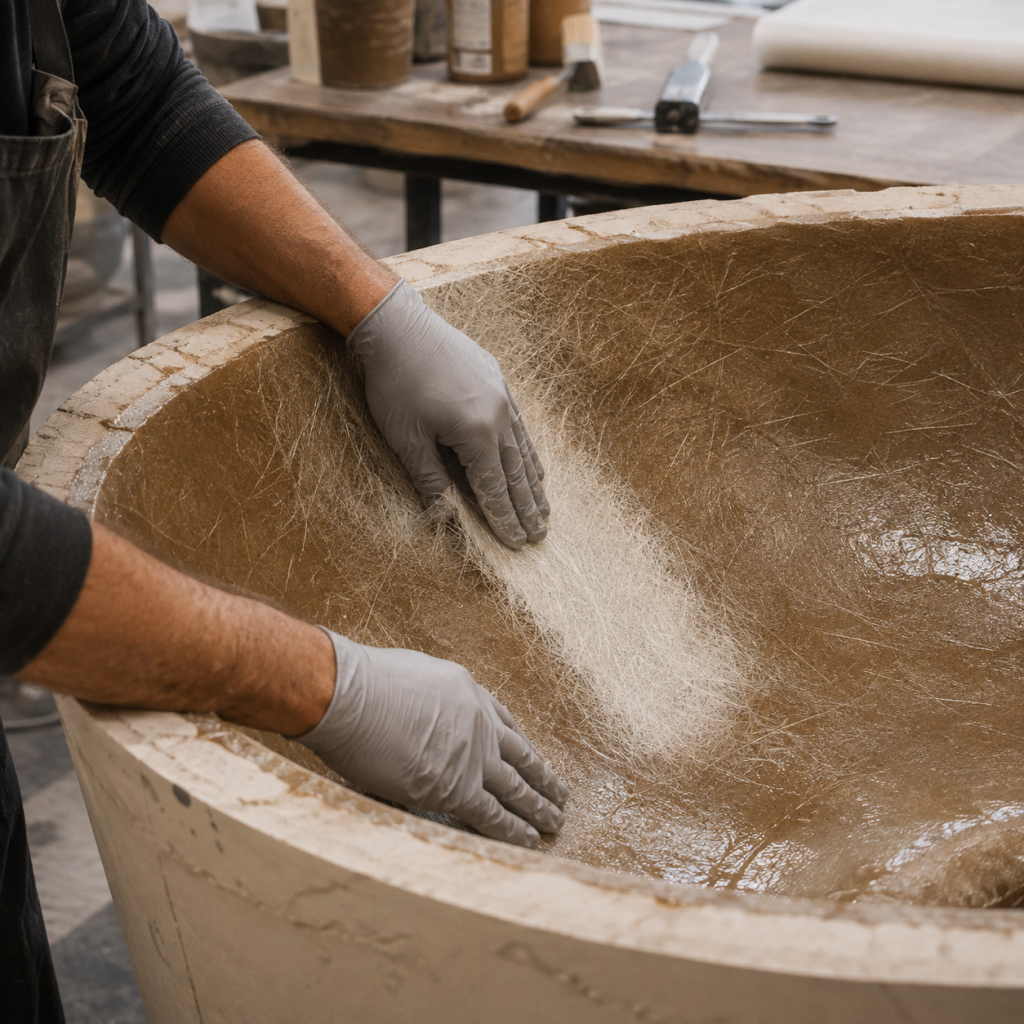
GRP mould making process work is followed by the layup itself, layers of fiberglass matting saturated with resin, applied by hand into the mould in a specific sequence that determines the final piece’s strength and rigidity. Curing time depends on resin type, wall thickness and ambient temperature, and rushing this stage is one of the fastest ways to compromise a planter’s long term durability in UAE outdoor conditions.
Finishing, Colour Matching and Quality Checks
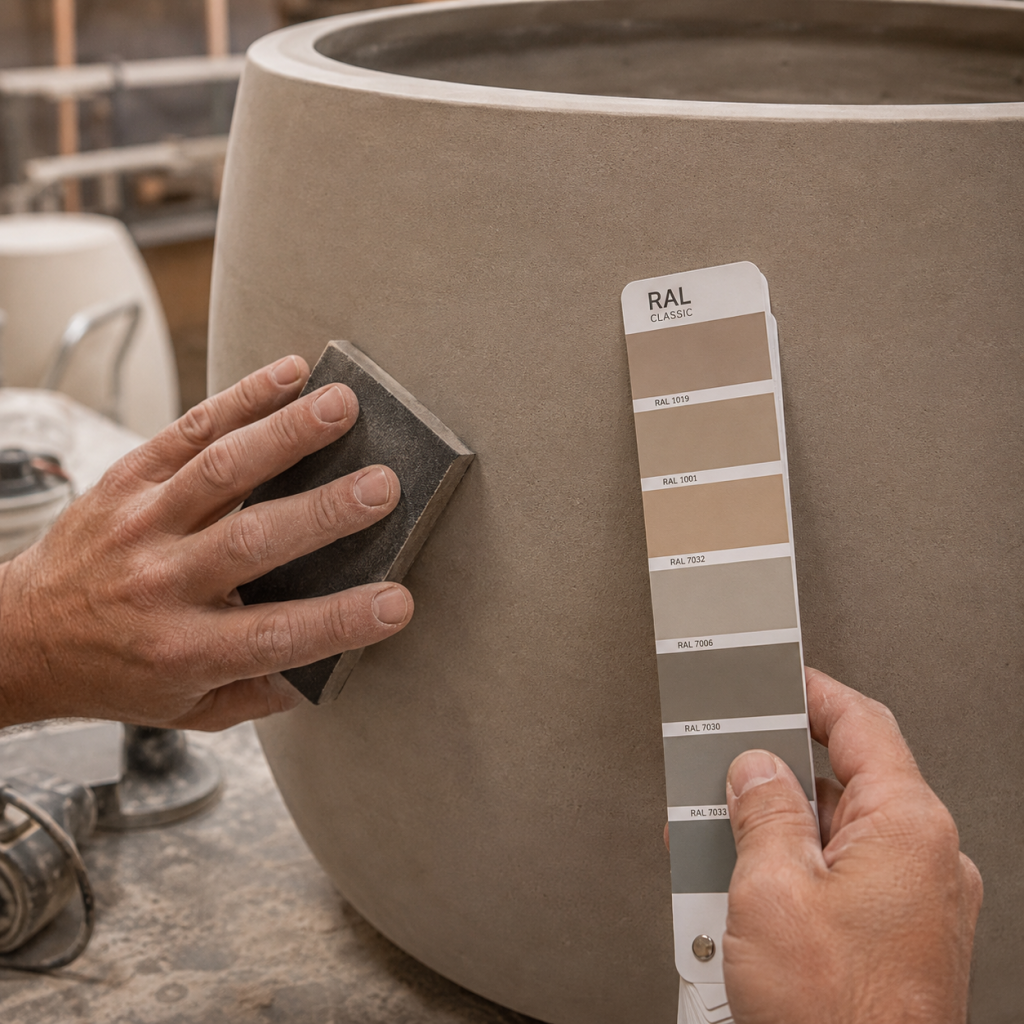
Once cured and released from the mould, a piece moves into finishing. Edges are trimmed, surfaces are sanded, and colour is matched, often to a specific RAL code supplied by the design team, to ensure consistency across every planter in an order. Each finished piece is inspected for surface quality, structural integrity and colour accuracy before it clears for delivery, since a flaw caught here is far cheaper to fix than one discovered on site.
What Determines Custom Planter Lead Time UAE Projects Should Plan For
Lead time is one of the most common questions from architects early in a project, and the honest answer depends on where a design falls in this process. A piece using an existing mould can move to production almost immediately. A fully bespoke form requires the full sequence, technical drawing, mould making, curing and finishing, and needs to be planned into a project timeline well before installation week, not treated as a fast turnaround once other elements are already confirmed.
Why Understanding the Process Helps You Specify Better
Bespoke planter production UAE projects benefit most when design teams treat the manufacturing process as part of the specification conversation, not a black box handled entirely by the supplier. Fiberglass planter manufacturing process decisions made early, form complexity, finish, quantity, directly shape both cost and timeline. This is the thinking behind bespoke GRP planter manufacturing UAE teams increasingly expect from a supplier, full visibility rather than a black box. Desert Pottery works with architects and designers from the earliest sketch through to final installation, so the piece that ships matches the piece that was actually briefed.
Planning a bespoke piece for an upcoming project? Get in touch here to talk through form, finish and lead time before your brief is finalised.