Custom GRP Planters: Colour and Finish for UAE Projects
In a well designed landscape or interior, the planter should never feel like an item that was added at the end. Its scale, colour, texture and surface finish can influence how naturally planting connects with stone, timber, metal, flooring and surrounding architecture. This is where custom GRP planters give project teams greater control. Instead of selecting a container that simply comes close to the design intent, architects and landscape consultants can coordinate the planter with the wider material palette from the start.
For commercial, hospitality, residential and public realm projects in the UAE, this level of coordination can make a noticeable difference. A planter may need to sit quietly beside limestone, contrast with dark joinery, repeat a brand colour, or create a consistent visual rhythm across dozens of units. The finish is not only decoration. It is part of the design language.
Why Custom GRP Planters Need Finish Coordination
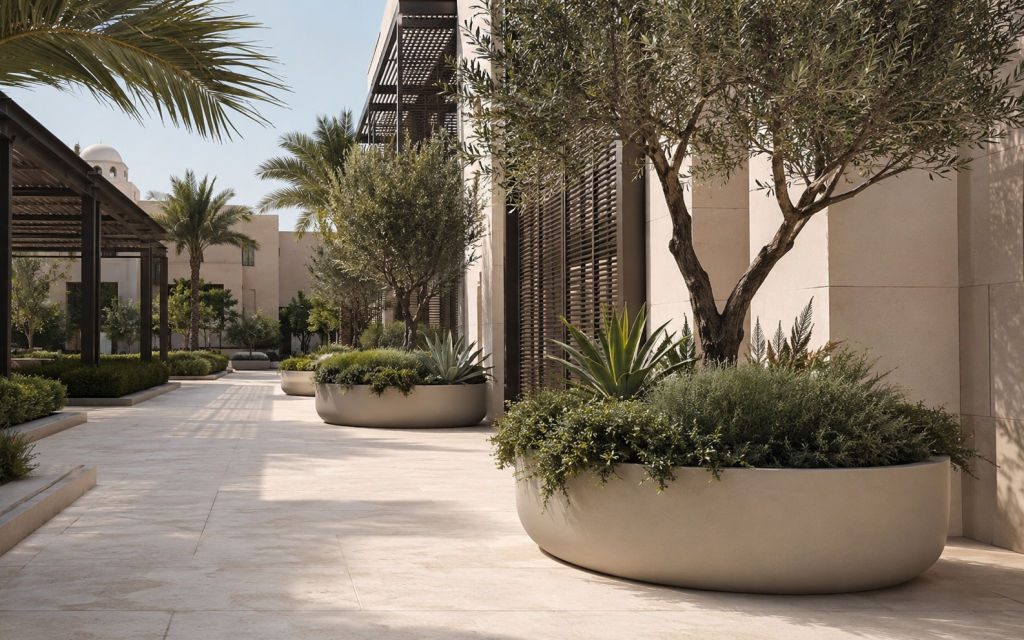
Planters often occupy highly visible positions. They frame entrances, define seating areas, soften circulation routes, sit beside feature walls and appear repeatedly across terraces, lobbies and courtyards. When the colour or texture feels disconnected from the surrounding finishes, the planter can interrupt an otherwise carefully coordinated space.
Working with a local manufacturer allows the project team to discuss colour, texture, dimensions and practical requirements together. Desert Pottery manufactures bespoke GRP pots and planters in Dubai, with options that can be developed around the needs of a specific project. This makes it possible to treat the planter as part of the architectural package rather than a separate decorative purchase.
Start With the Materials Around the Planter
The best finish choice usually begins with the surfaces already present in the project. A planter beside pale natural stone may need a soft neutral tone with a restrained matte surface. A planter placed against dark metal or timber may work better with deeper colour and a subtle texture. In a branded hospitality or retail environment, a more precise colour match can help the planting sit comfortably within the visual identity.
Before choosing a finish, consider what the planter will be seen beside. Review flooring, wall finishes, joinery, furniture, paving, lighting conditions and nearby landscape materials. This gives the manufacturer a clearer reference point and reduces the risk of choosing a colour in isolation.
Use RAL Colours as a Starting Point
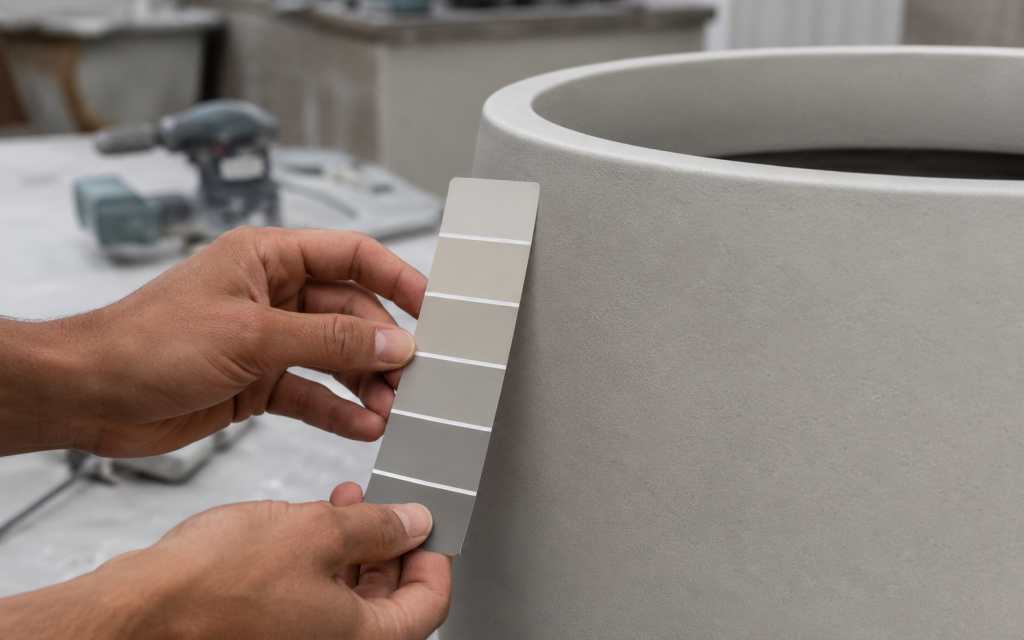
Colour references are particularly useful when several consultants, contractors and suppliers are involved. Desert Pottery offers more than 200 RAL colour options across selected GRP products, which gives designers a practical starting point for coordinating planters with an established project palette.
A RAL reference can help communicate intent, but the final appearance should still be considered in context. Light levels, surface texture and surrounding materials can change how a colour is perceived. A shade that looks balanced indoors may appear brighter in direct sunlight. For important areas, reviewing a physical sample or approved finish reference before production is a sensible part of the specification process.
Choose Texture According to the Space
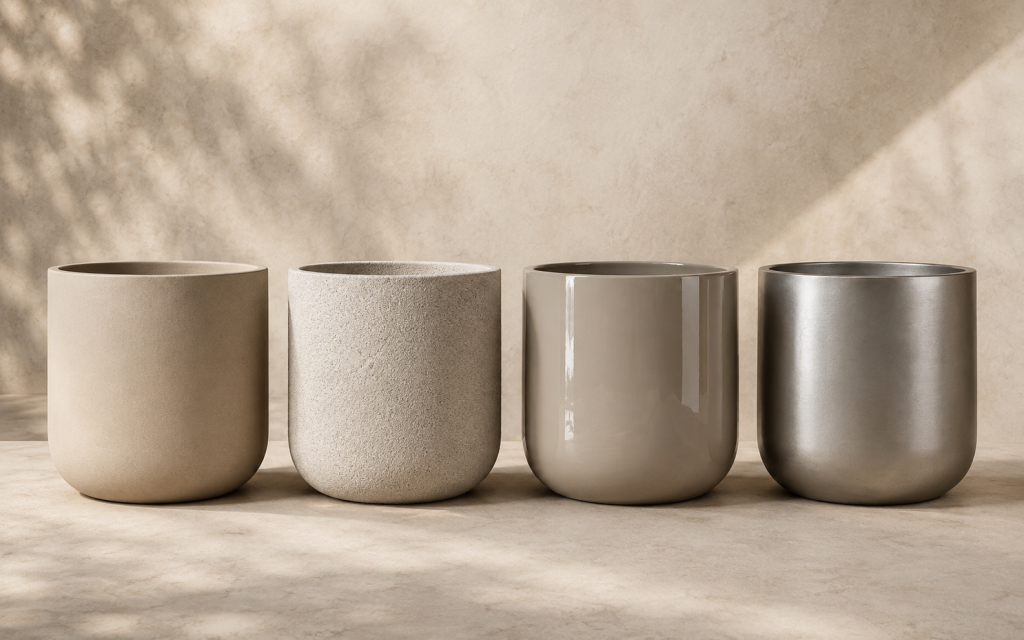
Texture changes the visual weight of a planter. A smooth matte finish can feel clean and architectural, while a stronger textured surface can add depth and help a large planter feel more grounded within an outdoor landscape. Glossy or metallic finishes can create a more expressive result where the design calls for a deliberate focal point.
The surrounding environment should guide the decision. Refined hotel lobbies often benefit from controlled, understated surfaces. Outdoor terraces and courtyards may allow more visible texture. Large scale landscape areas can use finish variation to create hierarchy without changing the planter form itself.
Desert Pottery planter collections include glossy, matte, metallic and textured finish options on selected products, giving designers room to coordinate the container with the character of the project.
Think About Repetition Across the Project
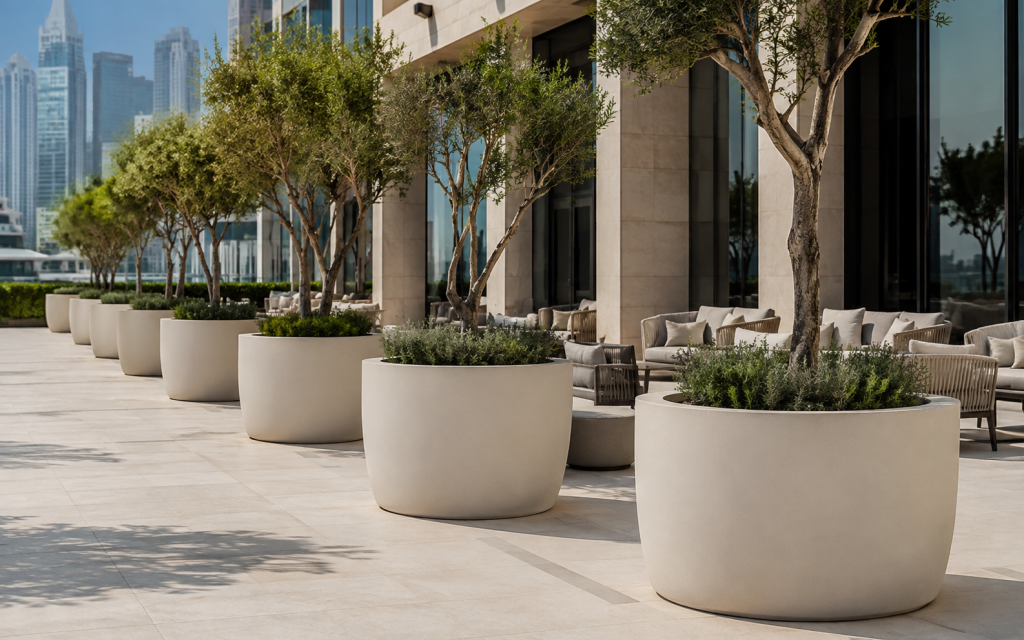
A single planter can be judged as an object. A group of twenty, fifty or one hundred planters becomes part of the architecture.
For projects with repeated units, consistency matters. The same colour, sheen and texture should read evenly across different sizes and locations. This is especially important in hotels, malls, office developments, residential communities and large commercial landscapes where planters may appear across several zones.
It is also useful to decide where consistency is required and where controlled variation is allowed. A project may use one finish throughout public areas, then introduce a second finish for VIP spaces, terraces or feature entrances. Establishing this logic early makes procurement and approvals much clearer.
Match the Planter to the Planting Design
The planter finish should support the planting rather than compete with it. Dense tropical foliage can work beautifully with quiet neutral containers, while sculptural trees or architectural plants may suit stronger geometric forms and deeper tones.
Scale matters as much as colour. A very detailed finish can become visually busy when combined with complex planting, while a simple finish can give the planting more presence. Landscape designers should therefore review the plant species, canopy size, foliage colour and planting density alongside the planter sample.
Where indoor planting forms part of the wider project, Desert Pottery interior landscaping also connects into specialist solutions through the Desert Group network, helping project teams think about the container, planting and space as one composition.
A Simple Finish Specification Checklist
Before approving the final planter finish, confirm the following points:
- Planter shape and dimensions
- RAL colour or approved colour reference
- Matte, glossy, metallic or textured surface
- Required texture level
- Indoor or outdoor location
- Nearby architectural materials
- Plant species and planting composition
- Drainage and irrigation requirements
- Quantity and consistency across repeated units
- Approved sample or finish reference before production
This information gives the manufacturer a much clearer brief and helps the design team review the planter as part of the complete project rather than as an isolated product.
From Object to Architectural Detail
The strongest planter installations are often the ones that do not call attention to the coordination behind them. The shape feels proportionate, the colour belongs to the palette, the texture supports the materials around it, and the planting feels naturally integrated with the space.
That is the real value of custom GRP planters. They allow designers to move beyond choosing from a limited set of standard colours and instead develop a solution around the project itself.
Desert Pottery manufactures GRP planters in the UAE for architects, landscape designers, contractors, hospitality teams and developers. Explore the planter collections, review bespoke GRP pots and planters, or contact the Desert Pottery team to discuss dimensions, colours, finishes and technical requirements for your next project. For wider project delivery context, you can also explore Desert Group landscape services.