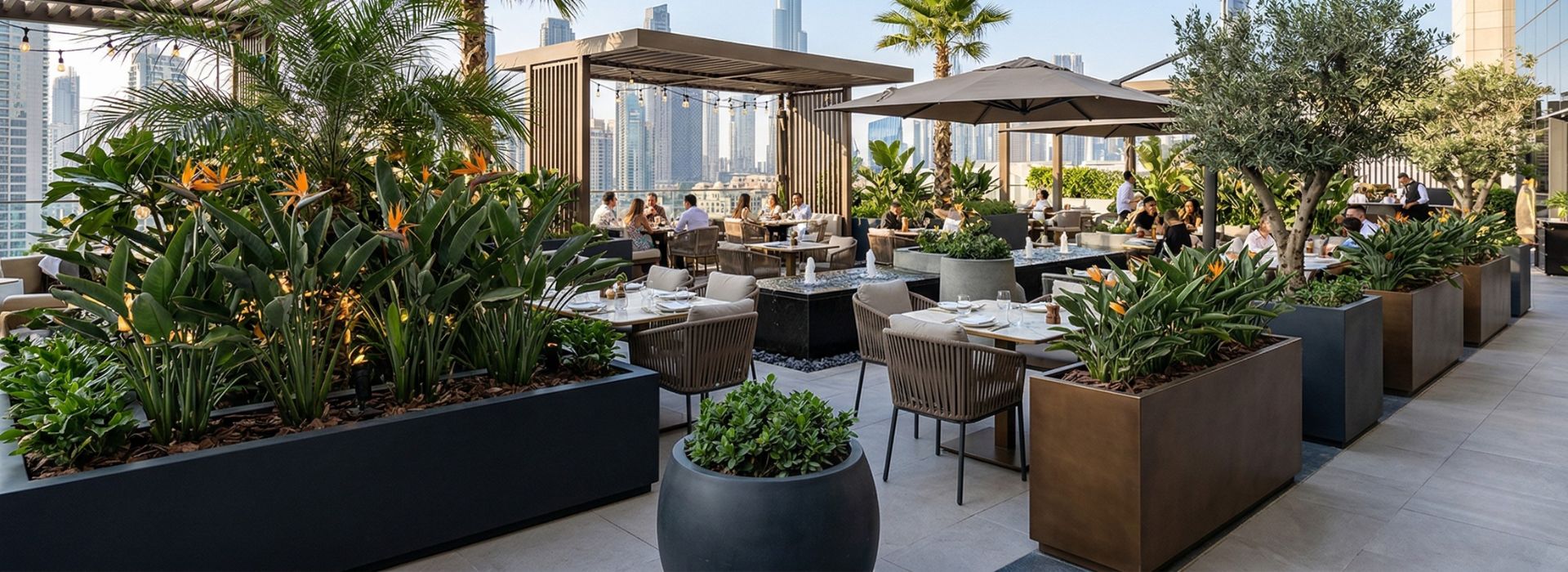
In hospitality environments, design decisions extend far beyond aesthetics. Every element within a hotel, resort, or restaurant contributes to the way guests move through the space and experience the property.
From arrival zones and courtyards to restaurant terraces and poolside lounges, spatial planning plays a critical role in shaping comfortable and memorable environments. While furniture, lighting, and architectural features often take centre stage, hospitality planters play a surprisingly important role in defining how these spaces function.
When integrated thoughtfully, planters become more than decorative elements. They help guide circulation, define seating zones, and create visual rhythm within hospitality environments.
For developers and designers planning hospitality spaces in the UAE, planters can serve as both functional design tools and architectural accents that enhance guest experiences.
Explore the range of planters available for hospitality projects here: https://desertpottery.ae/products/
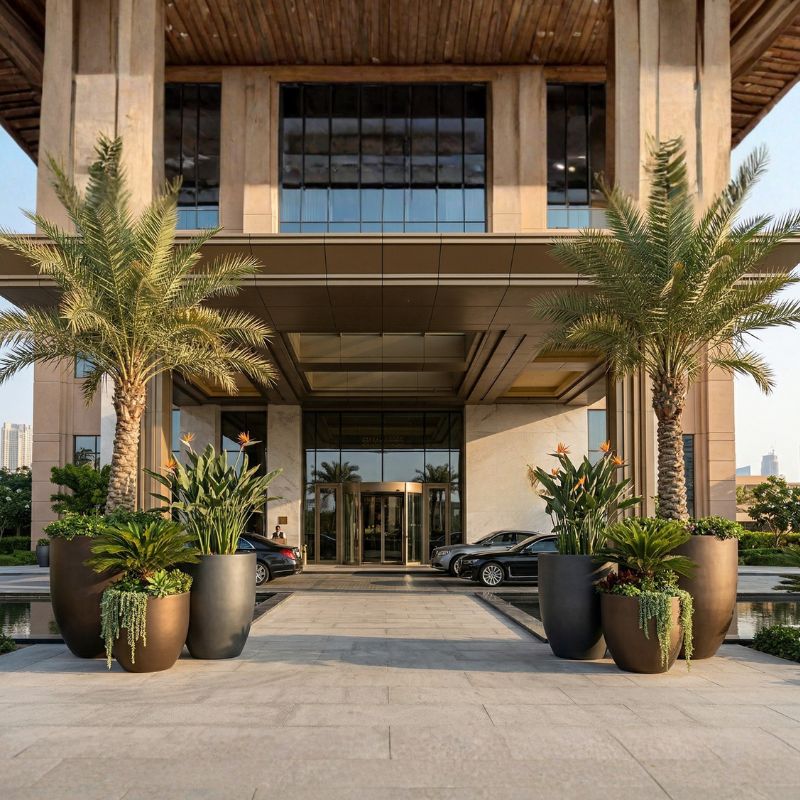
Hospitality Planters in Hotel Entrance Design
The arrival experience is one of the most important moments in hospitality design. The entrance of a hotel, resort, or restaurant sets expectations for the entire guest journey.
Strategically placed hospitality planters help frame entry points and strengthen the visual impact of arrival areas. Positioned along drop-off zones or walkways, they guide guests naturally toward reception areas or lobby entrances.
Large planters containing trees or structured greenery are frequently used to create balance and scale around entry zones. This approach softens architectural structures while reinforcing the sense of arrival that hospitality developers want guests to feel.
For many hotels and resorts, these entrance landscapes become part of the visual identity of the property.
Hospitality Planters for Restaurant and Lounge Layouts
Restaurants, rooftop lounges, and resort terraces frequently require multiple seating arrangements within the same space.
These may include:
- private dining tables
- group seating areas
- casual lounge zones
Hospitality planters allow designers to create subtle boundaries between these areas. By introducing greenery between seating arrangements, spaces can be defined without installing walls or rigid partitions.
This approach keeps the space visually open while still providing guests with a sense of comfort and privacy.
Creating Privacy with Hospitality Planters
Privacy plays an important role in hospitality environments, particularly in restaurants, poolside lounges, and terrace seating areas.
Instead of installing permanent screens, designers often use planters with greenery to create natural separation between tables or seating zones.
This technique allows spaces to feel intimate without restricting airflow or blocking views. It also supports the relaxed and welcoming atmosphere that hospitality environments aim to create.
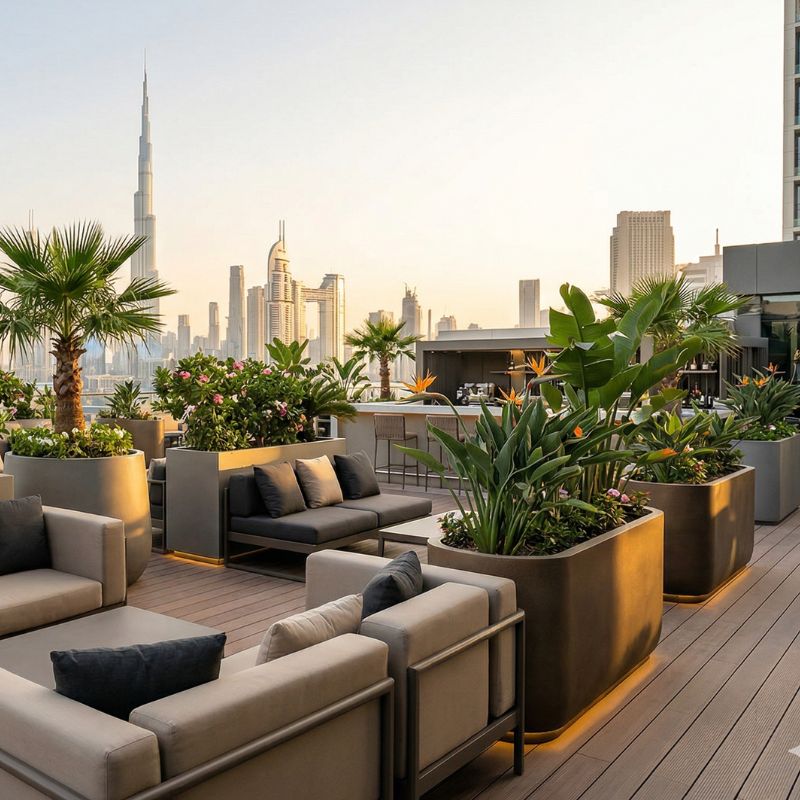
Using Hospitality Planters to Guide Guest Flow
Large hospitality environments often include expansive open areas such as courtyards, terraces, pool decks, and outdoor dining zones. While openness contributes to a relaxed atmosphere, it can sometimes make navigation less intuitive for guests.
You can explore more about indoor and outdoor planter considerations in our guide →
https://desertpottery.ae/indoor-vs-outdoor-planters-what-you-need-to-know-before-buying/
Hospitality planters help solve this challenge by subtly guiding movement through space. When placed along pathways or seating zones, they naturally direct circulation while maintaining the openness of the environment.
Rather than using barriers or railings, designers often rely on landscaping elements to create soft pathways that lead guests through the property.
Flexible Hospitality Spaces and Event Layouts
Hotels and restaurants frequently host events such as weddings, private dinners, and seasonal dining concepts.
Because of this, many hospitality spaces must remain flexible and adaptable.
Planters can help structure these environments in ways that allow layouts to evolve without requiring permanent construction changes. For project teams managing installation logistics, understanding planter handling and placement is equally important.
You can read more about this in our guide for project managers
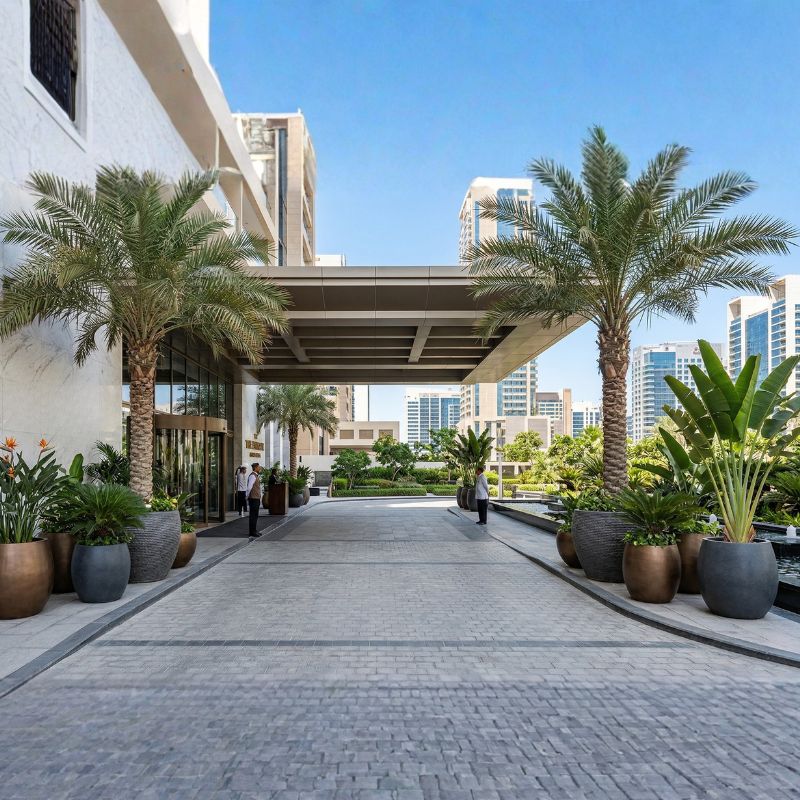
Hospitality Planters as Part of the Design Language
For hospitality developers, consistency in design language is essential. Every design element contributes to the overall character of the property.
Hospitality planters often become part of the visual rhythm of a space. They complement architectural materials, furniture layouts, and landscape elements.
When integrated thoughtfully into the design concept, planters reinforce the identity of the property and contribute to a cohesive guest experience.
Rather than being treated as accessories, they can become key components of the architectural landscape
Hospitality design is ultimately about creating environments where guests feel comfortable, welcomed, and inspired to spend time.
While architecture and interiors form the foundation of these spaces, landscape elements such as planters play an equally important role in shaping how guests move through and experience them.
Thoughtfully positioned hospitality planters help guide circulation, organize seating zones, and strengthen the visual identity of hospitality environments.
When incorporated early in the design process, they become valuable tools in creating spaces that are both functional and memorable for guests.
If you are planning a hospitality project and exploring planter solutions, you can connect with the Desert Pottery team to discuss suitable designs and specifications for your space.
👉 Contact us:
https://desertpottery.ae/contact-us/